FIELD NOTES / BUYING IN AUSTIN
Home inspection in Austin: what Texas inspectors must check, what it costs and how the option period works
A home inspection in Austin follows the Texas Real Estate Commission's Standards of Practice (22 TAC 535.227-535.233) and ends in TREC's Property Inspection Report form, REI 7-6, which rates every system Inspected, Not Inspected, Not Present or Deficient. Homeyou's Austin cost guide, updated August 17, 2026, puts a standard inspection at $169 to $382, and the whole job has to fit inside the option period a buyer negotiates in TREC's resale contract, form 20-19, mandatory since July 1, 2026. Here is what the inspector must check, what the rules leave out, which specialists cover the gaps, and how the report turns into a repair negotiation.
By David Eimer · Austin Journal · 11 minute read · Published
The numbers
- Report form every Texas home inspector must use
- TREC REI 7-6As of Required since February 1, 2022
Each item is marked I (Inspected), NI (Not Inspected), NP (Not Present) or D (Deficient).
Source: Texas Real Estate Commission ↗
- Home inspection cost, Austin
- $169 to $382As of Updated August 17, 2026
Homeyou's figure, from 549 Austin home inspections quoted this year; about $300 for a condominium.
Source: Homeyou ↗
- Time to deliver the option fee under TREC contract 20-19
- Within 3 days after the Effective DateAs of Form 20-19, mandatory July 1, 2026
If no fee is stated or it arrives late, the buyer has no unrestricted right to terminate.
Source: Texas Real Estate Commission ↗
- Austin Energy ECAD audit, typical single-family home
- About $200 to $300As of September 2026
Homes 10 years or older in the city limits and Austin Energy territory; due to the buyer at least 3 days before the option period ends.
Source: Austin Energy ↗
- Austin metro listings with a price cut
- 27.6%As of August 2026
Median 73 days on market across 12,517 active listings.
Source: Realtor.com Economic Research ↗
What does a home inspection in Austin cover under Texas rules?
A home inspection in Austin is governed by state rules, not by the inspector's own checklist. The Texas Real Estate Commission's Standards of Practice, 22 TAC 535.227 through 535.233, set the minimum for inspecting a one- to four-family home, and TREC's REI 7-6 form describes the result as "a visual survey of a structure and a basic performance evaluation of the systems and components of a building." Inspectors must operate installed equipment and appliances "in at least one mode with ordinary controls at typical settings" and look at accessible systems from near proximity.
The report follows a fixed order, so an Austin report from one licensed inspector reads like one from another. Every line gets one of four boxes: I for Inspected, NI for Not Inspected, NP for Not Present and D for Deficient. TREC defines a deficiency as a condition that "adversely and materially affects the performance of a system, or component" or "constitutes a hazard to life, limb, or property."
The six parts of TREC's REI 7-6 home inspection report
| Report section | What it includes |
|---|---|
| I. Structural systems | Foundations, grading and drainage, roof covering, roof structure and attic, walls, ceilings and floors, doors, windows, stairways, fireplaces and chimneys, porches, balconies, decks and carports |
| II. Electrical systems | Service entrance and panels; branch circuits, connected devices and fixtures |
| III. Heating, ventilation and air conditioning | Heating equipment, cooling equipment, duct systems, chases and vents |
| IV. Plumbing systems | Supply and fixtures (with static water pressure reading), drains, wastes and vents, water heating, hydro-massage equipment, gas distribution and gas appliances |
| V. Appliances | Dishwashers, food waste disposers, range hood and exhaust systems, ranges, cooktops and ovens, and other listed appliances |
| VI. Optional systems | Landscape irrigation, pools and spas, outbuildings, private water wells, private sewage systems and other built-in appliances, inspected only when ordered |
The foundation line matters most in Central Texas. The Standards require the inspector to "render a written opinion as to the performance of the foundation" and to report visible signs of trouble such as cracking, separation or deflection. That is an opinion from what can be seen, not an engineering study, and a Deficient foundation line is usually where the next call goes to a structural engineer.
Sources: Texas Real Estate Commission ↗
What Texas home inspectors are not required to check
The limits of a Texas home inspection are written into the same rules, and they explain most surprises after closing. Under TREC's Standards of Practice an inspector does not have to do destructive testing, use specialized equipment such as thermal cameras or moisture meters, inspect anything "buried, hidden, latent, or concealed," move furniture or stored items, determine code compliance, or assess mold, asbestos, lead or wood-destroying insects. An inspector may offer a thermal scan or moisture readings as an extra; the rules do not require either.
The REI 7-6 form adds its own list. The inspector is not required to identify all potential hazards, light a pilot or turn on decommissioned utilities, rank one deficiency above another, return to verify repairs, or inspect the optional systems (irrigation, pools, outbuildings, wells and septic) unless you order them. The inspection is not a code inspection and does not "imply insurability or warrantability" of the house.
Older Austin houses often draw Deficient marks for conditions that were legal when they were built. TREC's form tells inspectors to report hazards such as missing GFCI and AFCI protection, ordinary glass where safety glass is expected today, missing smoke or carbon monoxide alarms, wide baluster spacing, and gas piping, including CSST, without bonding. The same form says a Deficient item does "NOT obligate any party to make repairs," which is why the report is the start of a negotiation, not a repair order. The guide to buying an older Austin home covers what those houses tend to need.
Sources: Texas Real Estate Commission ↗
How much does a home inspection cost in Austin?
Homeyou's Austin cost guide, updated August 17, 2026 and based on 549 Austin home inspections quoted this year, puts a home inspection in Austin at $169 to $382. It lists about $200 for a home under 1,000 square feet, about $300 for a condominium and $350 or more for larger homes, and notes that detached garages, pools and septic systems can add charges. TREC's rules set what an inspection must cover, not what it costs, so every inspector sets their own fee and price lists vary by size, age and add-ons.
The add-ons are where an Austin inspection budget grows. A wood-destroying insect report, a mold assessment, a sewer camera scope of the line to the street and, for a seller, the city's energy audit are all separate services, and several need a license other than a TREC inspector license.
Inspections beyond the standard Texas home inspection, and who performs them
| Check | Who may perform it | Regulator or rule | Published Austin cost |
|---|---|---|---|
| Home inspection (REI 7-6) | Inspector licensed by TREC, or otherwise permitted by law | TREC Standards of Practice, 22 TAC 535.227-535.233 | $169 to $382 (Homeyou, August 17, 2026) |
| Wood-destroying insect report | Certified applicator or technician licensed in the termite control category | Texas Department of Agriculture, Structural Pest Control Service | Not published |
| Mold assessment | TDLR-licensed mold assessment consultant or technician, unless exempt | Occupations Code Chapter 1958; 16 TAC Chapter 78 | Not published |
| Sewer line (private lateral) | Owner's responsibility; scoped by a camera service | Austin Water, City Code Chapter 15-11 | Not published |
| ECAD energy audit (seller, homes 10+ years old) | RESNET Rater or BPI Building Analyst Professional | Austin Energy ECAD ordinance | About $200 to $300 (Austin Energy) |
Published prices were only found for two lines of that table: Homeyou's inspection range and Austin Energy's estimate of about $200 to $300 for an ECAD energy audit on a typical single-family home of 1,800 square feet or smaller with one air conditioning system. For the rest, ask for a written quote when you book, and ask whether the price covers the whole property or only the main house.
Sources: Homeyou ↗ · Austin Energy ↗ · Texas Real Estate Commission ↗ · Texas Department of Licensing and Regulation ↗ · Texas Department of Agriculture ↗ · Austin Water ↗
The option period: the clock every Austin home inspection runs against
In an Austin resale purchase, the inspection happens during the option period in TREC's One to Four Family Residential Contract, form 20-19, which licensees have been required to use since July 1, 2026. The buyer pays an option fee and gets "the unrestricted right to terminate this contract" by giving notice within the number of days written into Paragraph 5. The contract sets no default length; the number of days is negotiated with the offer. Notice must be given by 5:00 p.m. local time on the last day.
The fee has its own deadline. Under Paragraph 5A the buyer must deliver the earnest money and option fee to the escrow agent within 3 days after the Effective Date, and under 5D, if no fee amount is stated or the fee arrives late, the buyer "shall not have the unrestricted right to terminate." If the buyer terminates in time, the option fee goes to the seller and the earnest money comes back to the buyer. If the buyer closes, the fee is credited to the price.
Everything the inspection triggers has to fit inside those days. TREC's REI 7-6 form recommends getting further evaluations and cost estimates "prior to the expiration of any contractual time limitations, such as option periods," and in Austin the seller's ECAD energy audit must reach the buyer at least three days before the option period ends. In practice that means booking the inspector the day the contract is signed and lining up any specialists as soon as the report arrives. The Austin energy audit (ECAD) rule explains the seller's side of that deadline.
Sources: Texas Real Estate Commission ↗ · Austin Energy ↗
Foundation, mold, termite and sewer inspections in Austin: when to call a specialist
Four checks sit outside the standard Texas home inspection, and each is handled by a different licensed trade. Mold is regulated by the Texas Department of Licensing and Regulation under Occupations Code Chapter 1958, and TDLR's Consumer Mold Information Sheet says companies and individuals doing mold assessment must be licensed by TDLR unless exempt. The same sheet says there are "no national or state standards for a 'safe' level of mold" and that one licensee may not do both the assessment and the cleanup on the same project, so the company that tests should not be the company that remediates.
Termites are the Texas Department of Agriculture's field. TDA's instructions for the Texas Official Wood Destroying Insect Report say the report "can only be completed by a certified applicator or technician licensed in the termite control category." The TREC contract treats that work as a possible lender requirement: under Paragraph 7E, neither party has to pay for lender-required repairs, which include wood-destroying-insect treatment, unless they agree to, and a buyer may terminate if those repairs exceed 5% of the sales price.
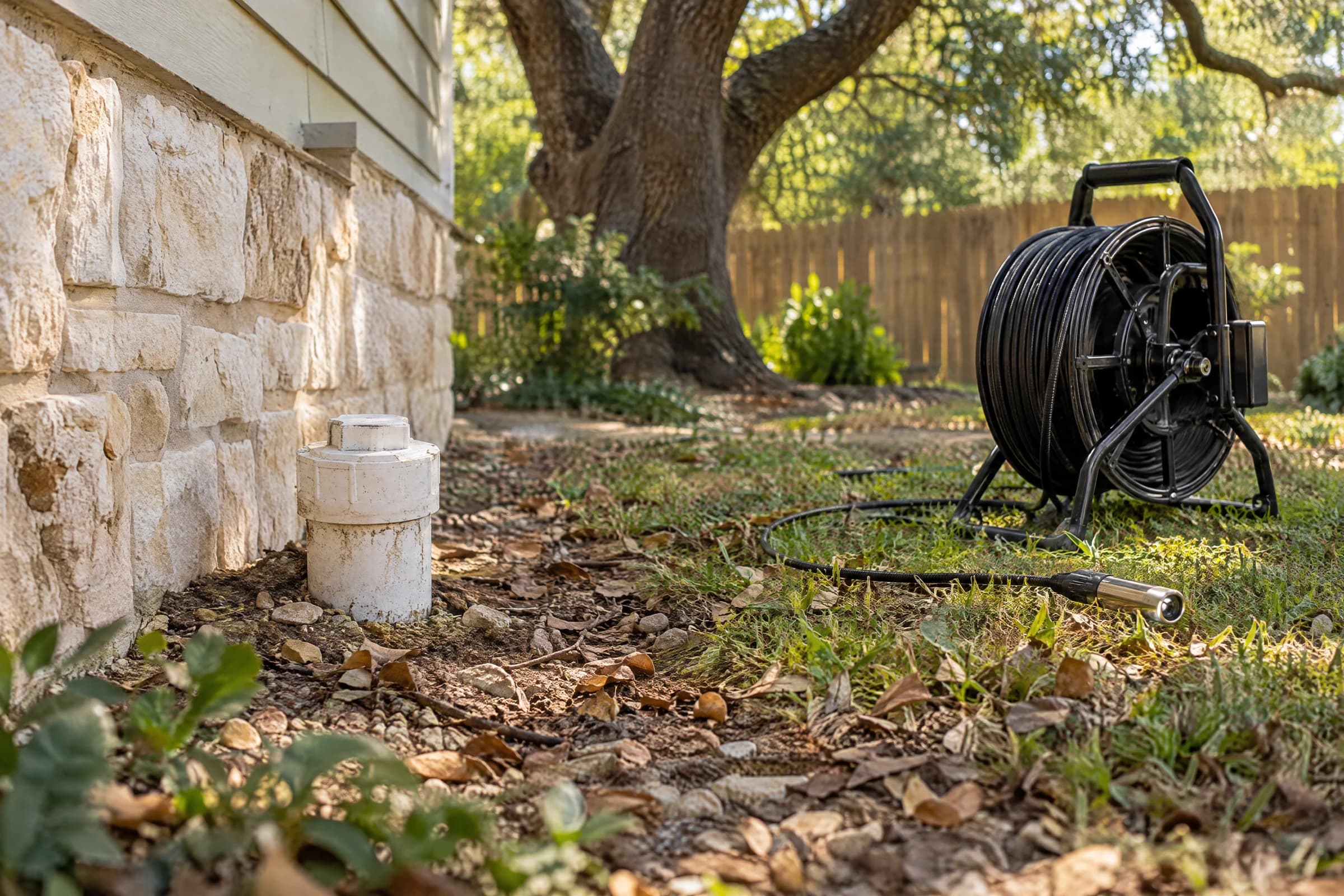
The sewer line is the one Austin buyers most often skip. Austin Water says a private lateral, the wastewater line from the house to the city's system, is the property owner's responsibility, and that defective laterals must be repaired. A standard inspection looks at drains inside the house; a sewer camera scope looks at the buried line itself, which the Standards of Practice leave out as concealed. On an older house under big live oaks, a scope is worth pricing before the option period ends, and the Austin tree rules before buying explain why roots and protected trees shape what a repair can be.
Sources: Texas Department of Licensing and Regulation ↗ · Texas Department of Agriculture ↗ · Texas Real Estate Commission ↗ · Austin Water ↗
Negotiating repairs after an Austin home inspection in the 2026 market
Most Austin repair negotiations start from Paragraph 7D of the TREC contract, where the buyer accepts the property "As Is" or As Is with a list of specific repairs. The form is explicit that choosing As Is does not stop the buyer from inspecting, "negotiating repairs or treatments in a subsequent amendment," or terminating during the option period. Agreed repairs go into an amendment, and TREC's Amendment to Contract, form 39-11, also became mandatory on July 1, 2026.
Paragraph 7F controls how repairs get done. Unless the parties agree otherwise, the seller completes them before closing, obtains any required permits, and uses people licensed for the work or, where no license exists, commercially engaged in the trade. The seller must hand over documentation of the scope of work and payment and transfer any transferable warranties. Checking the city record afterward is simple with the Austin permit history check.
The market gives buyers room this year. Realtor.com's August 2026 data shows 27.6% of Austin metro listings had cut their price, the median home sat 73 days on market and 12,517 homes were for sale. When that many sellers are already adjusting price, a seller facing a Deficient roof or electrical panel has more reason to weigh a repair credit or a price change against relisting. The Austin housing market update for September 2026 has the full picture.
Sources: Texas Real Estate Commission ↗ · Realtor.com Economic Research ↗
What changed for Texas home inspections in 2026
Two things changed in 2026, and one thing did not. The TREC contract forms changed: on July 1, 2026, the resale contract moved from 20-18 to 20-19, alongside a new Seller's Disclosure Notice (55-1) and a new Seller's Disclosure about Groundwater and Surface Water Rights (61-0). The 20-19 contract adds Paragraph 7I on water rights, and Paragraph 7B still lets a buyer who receives the seller's disclosure only after signing terminate within 7 days after receiving it or before closing, whichever comes first.
The inspection standards did not change. TREC's Texas Real Estate Inspector Committee had proposed Standards of Practice updates for range hoods and exhaust systems, mechanical ventilation, bathroom heaters and dryer exhaust in rules 535.230 and 535.232, but in an article dated August 7, 2026, TREC reported that the committee recommended withdrawing them "for now" to review recommendations from the Texas Regulatory Efficiency Office, and reproposing them later. The committee's next meeting is set for October 19, 2026. Until new rules are adopted, the REI 7-6 form in use since February 1, 2022 stays the standard report.
For a buyer this fall, that means an Austin inspection report looks the same as last year's, while the contract around it has new disclosure paragraphs worth reading before the option period starts.
Sources: Texas Real Estate Commission ↗
How to schedule a home inspection in Austin, step by step
Book the inspector before the contract is signed if you can, so the inspection lands in the first days of the option period. Look up the license on TREC's License Holder Search, where you can filter by inspector; Texas licenses inspectors at three levels, apprentice inspector, real estate inspector and professional inspector. Ask what the fee covers, whether a sewer scope, a wood-destroying insect report or the optional systems are included, and when the report will arrive.
Be there for the last hour of the inspection and read every Deficient line against the house, not just the summary. Send the items that need a specialist, such as a foundation, mold or sewer finding, out for evaluation and a written estimate the same day, because TREC's form puts the burden of further evaluation on the client and the option period does not pause. On a new house, the Austin new construction guide covers the phase inspections that come before the final one, the pre-drywall inspection guide covers the visit before insulation and wallboard close the walls, and the Austin home builders guide covers the warranties builders publish and the records to check on one.
David Eimer works with buyers across Austin through inspections and the negotiations that follow them. If you are under contract or about to be, bring him the report and the contract dates; he can help you separate what matters from what is routine and put it in front of the seller before the option period runs out.
Sources: Texas Real Estate Commission ↗
Common questions
How much does a home inspection cost in Austin, Texas?
Homeyou's Austin cost guide, updated August 17, 2026, puts a home inspection in Austin at $169 to $382, about $300 for a condominium and $350 or more for larger homes. Add-ons such as a sewer scope, a wood-destroying insect report or a mold assessment cost extra, and TREC does not set inspection fees.
What does a Texas home inspection not cover?
Under TREC's Standards of Practice, a Texas home inspector does not have to do destructive testing, inspect concealed or buried items, move furniture, determine code compliance, or assess mold, asbestos, lead or wood-destroying insects. Pools, irrigation, outbuildings, wells and septic systems are optional items inspected only when ordered.
Does a Deficient item on an Austin inspection report mean the seller must fix it?
No. TREC's REI 7-6 form says items marked Deficient do not obligate any party to make repairs. Repairs are negotiated during the option period and written into an amendment to the TREC contract; lender-required repairs follow Paragraph 7E of the contract.
How long is the option period in Texas?
The TREC resale contract, form 20-19, sets no default option period; the buyer and seller write in the number of days. The buyer must deliver the option fee to the escrow agent within 3 days after the Effective Date, and termination notice is due by 5:00 p.m. local time on the last day.
Who can do a mold inspection in Austin, Texas?
Mold assessment in Texas must be done by someone licensed by the Texas Department of Licensing and Regulation unless an exemption applies. TDLR says no state or national standard defines a safe level of mold, and the same licensee may not do both the assessment and the remediation on one project.
Take this to your next conversation
- Book a TREC-licensed inspector the day the contract is signed and confirm the license on TREC's License Holder Search.
- Deliver the option fee to the escrow agent within 3 days of the Effective Date, or the right to terminate is lost.
- Add a sewer camera scope on older houses and a wood-destroying insect report if the lender or the house calls for one.
- Send foundation, mold or sewer findings to a licensed specialist for a written estimate before the option period ends.
- Put agreed repairs in a TREC amendment and ask for the repair documentation and permits before closing.
Sources and review date
Sources checked . Planning suggestions are editorial guidance; current property facts and requirements need an address-specific check.
- Texas Real Estate Commission: Real Estate Inspector Standards of Practice (22 TAC 535.227-535.233), online version ↗
- Texas Real Estate Commission: Property Inspection Report Form, REI 7-6 ↗
- Texas Real Estate Commission: Updates to Texas Inspector Standards of Practice and Inspection Report Form ↗
- Texas Real Estate Commission: SOPs Updates on Pause, TREIC Reviews Regulatory Recommendations (August 7, 2026) ↗
- Texas Real Estate Commission: One to Four Family Residential Contract (Resale), TREC No. 20-19 ↗
- Texas Real Estate Commission: Contracts (forms effective July 1, 2026) ↗
- Texas Real Estate Commission: Professional Inspector license type ↗
- Texas Real Estate Commission: License Holder Search ↗
- Texas Department of Licensing and Regulation: Consumer Mold Information Sheet ↗
- Texas Department of Agriculture: Instructions for the Texas Official Wood Destroying Insect Report ↗
- Austin Energy: ECAD for residential sellers ↗
- Austin Water: Private Lateral Program ↗
- Homeyou: Home Inspection in Austin, TX, costs (updated August 17, 2026) ↗
- Realtor.com Economic Research: monthly housing inventory data, Austin metro, August 2026 ↗