FIELD NOTES / SELLING IN AUSTIN
Austin energy audit before selling: the ECAD rule, its deadline and what it costs
An Austin energy audit is required before most older homes inside the city change hands: Austin Energy's Energy Conservation Audit and Disclosure (ECAD) ordinance applies to homes within the Austin Energy service area, within the Austin city limits and 10 years old or older, and under City Code Section 6-7-12 the seller must give the buyer the audit no later than 3 days before the option period ends. Austin Energy puts the cost at about $200 to $300 for a typical single-family home of 1,800 square feet or smaller with one air conditioning system, and an audit stays valid for ten years. Here is who must order one, what the auditor records, which homes are exempt, what skipping it risks, and where the audit sits in a fall 2026 listing calendar.
By David Eimer · Austin Journal · 13 minute read · Published

The numbers
- Age at which an Austin home needs an ECAD audit to sell
- 10 years old or olderAs of September 2026
The home must also be within the Austin city limits and the Austin Energy service area.
Source: Austin Energy ↗
- Deadline to give the buyer the audit
- No later than 3 days before the option period endsAs of City Code Section 6-7-12, Supplement No. 163
With no option period: with the seller's disclosure notice, or before the sale if no notice is required.
- Estimated cost of a residential ECAD audit
- $200 to $300As of September 2026
For a typical single-family home of 1,800 square feet or smaller with one air conditioning system; professionals set their own prices.
Source: Austin Energy ↗
- How long an audit satisfies the ordinance
- 10 years after it is first performedAs of September 2026
Source: Austin Energy ↗
- Fine for failing to comply
- Up to $500; up to $2,000 with criminal negligenceAs of City Code Section 6-7-42, Supplement No. 163
A Class C misdemeanor per Austin Energy's FAQ; each instance of a violation is a separate offense.
- Average close-to-list price, City of Austin
- 93.3%As of August 2026
Up from 91.6% in August 2025, with 4.6 months of inventory and a $560,000 median sale price.
Source: Unlock MLS ↗
Does my Austin home need an energy audit before I sell?
Austin's energy audit rule is local, not state law. Austin Energy's residential ECAD page says the ordinance applies to homes “Within the Austin Energy service area,” “Within the Austin city limits” and “10 years old or older,” and its overview puts the seller's duty in two sentences: “Before selling your home, you must have an energy audit done if your home is 10 years or older. You must disclose the results to potential buyers.” The rule is Chapter 6-7 of the Austin City Code, adopted as Ordinance 20081106-047 and amended by Ordinance 20110421-002.
All three conditions have to be true at once. A house outside the city limits is not covered, and neither is a house inside the city that takes electric service from another utility, since Austin Energy's exemptions page lists “Your property does not receive electric service from Austin Energy” as a reason the audit is not required. The age test runs to the sale, not the listing: Section 6-7-13(B)(1) exempts a facility “constructed no more than ten years before the time of sale.” Duplexes, triplexes and fourplexes 10 years or older carry the same requirement per Austin Energy's overview, and Section 6-7-35 makes the owner of any number of condominium units meet the residential requirement unless a multi-family audit of the whole building exists and is disclosed to the buyer before the sale.
Austin Energy offers two ways to comply: “Option 1: Schedule an energy audit with a qualified ECAD Energy Professional” or “Option 2: Participate in a qualifying energy efficiency program.” For buyers, the utility's advice is equally short: “Austin Energy recommends asking your real estate agent for one of the following prior to closing: A copy of the home's ECAD audit results or Proof of participation in a qualifying Austin Energy program.” The pre-listing checklist on the selling page puts the audit beside the other documents a seller assembles; the table below is the applicability test in one place.
Does the Austin ECAD audit apply? The tests, as Austin Energy and the City Code state them
| Test | Rule | Where it is written |
|---|---|---|
| Location | Within the Austin city limits | Austin Energy residential ECAD page; Chapter 6-7 |
| Electric utility | Within the Austin Energy service area | Austin Energy residential ECAD page |
| Age | 10 years old or older at the time of sale | Austin Energy; Section 6-7-13(B)(1) |
| Duplex, triplex, fourplex | Same requirement at 10 years or older | Austin Energy ECAD overview |
| Condominium unit | Residential requirement applies unless a multi-family audit of the building is disclosed before sale | Section 6-7-35 |
| Ways to comply | Audit by an ECAD Energy Professional, or proof of a qualifying Austin Energy program | Austin Energy residential ECAD page |
Sources: Austin Energy ↗ · City of Austin Code of Ordinances ↗
When is the ECAD audit due, and how does it attach to the Texas seller's disclosure?
The deadline is written into the code by contract type. Section 6-7-12 requires the owner to provide a copy of the audit to the purchaser, “if the contract for the sale of the facility provides an option period during which the prospective purchaser may terminate the contract for any reason, no later than 3 days prior to the termination of the option period.” If the contract has no option period, the copy is due “concurrent with the seller's disclosure notice required under state law,” or, “if no seller's disclosure notice is required under state law, before the time of sale.” Austin Energy's sellers page condenses this to “at least three days before the end of the option period or time of contract.”
The delivery package has two parts. Austin Energy says the seller provides “a copy of the energy audit” and “an Audit Certificate to attach to the Seller's Disclosure Notice.” The notice in use across Texas is TREC Form 55-1, effective May 28, 2026 per the Texas Real Estate Commission's forms page, prepared under Texas Property Code Section 5.008; the form's own footer says “This form replaces 55-0.” The statewide form never mentions ECAD or an energy audit: its only insulation line is a checkbox for “Urea-formaldehyde Insulation,” and item 9 asks whether the seller is aware of “Room additions, structural modifications, or other alterations or repairs made without necessary permits” and of “Any notices of violations of deed restrictions or governmental ordinances affecting the condition or use of the Property.” The ECAD certificate is an Austin attachment to a Texas form, not a line on it.
The timing advice from the utility is blunt. Its residential FAQ states that “The City and Austin Board of REALTORS® recommends the ECAD audit be conducted far enough in advance of the end of the option period or contract signing to meet this requirement.” An audit needs a site visit and a written report, so the practical reading is to order it when you decide to sell, before the photographer, as the pre-listing paperwork guide sequences it. Section 6-7-11(B) also requires the auditor to send a copy to the City within 30 days, and Austin Energy “maintains a record of each audit for the City of Austin,” which is how a later owner can confirm one exists.
When the Austin ECAD audit must reach the buyer, by contract type
| Contract | Deadline | Source |
|---|---|---|
| Contract with an option period | No later than 3 days prior to the termination of the option period | Section 6-7-12(1) |
| No option period, seller's disclosure notice required | Concurrent with the seller's disclosure notice required under state law | Section 6-7-12(2)(a) |
| No option period, no disclosure notice required | Before the time of sale | Section 6-7-12(2)(b) |
| Auditor's copy to the City | Not later than 30 days after the audit is complete | Section 6-7-11(B) |
| Audit reuse | Meets the requirement for 10 years after it is first performed, unless a newer audit exists | Section 6-7-5(B); Austin Energy sellers page |
Sources: City of Austin Code of Ordinances ↗ · Austin Energy ↗ · Texas Real Estate Commission ↗
How much does an Austin energy audit cost, and what does it cover?
Austin Energy's sellers page estimates the cost at “about $200 to $300 for a typical single-family home 1,800 square feet or smaller with one air conditioning system,” and its FAQ says the audit “was designed to keep the cost under $300” for that same home. The professionals page adds the caveat that matters for a quote: “ECAD energy professionals set their own prices.” A larger house or a second air conditioning system takes longer to test, so a 3,000-square-foot home with two systems should expect a higher figure and is worth two quotes.
Who can perform it is fixed by the code and the utility. Section 6-7-5(A) requires an audit to be “conducted by a person certified as a building performance analyst or equivalent by an agency approved by the director” and to “use the audit and disclosure forms prescribed by rule under Section 6-7-3.” Austin Energy states that “Qualified ECAD Energy Professionals are certified Residential Energy Services Network (RESNET) Raters or Building Performance Institute (BPI) Building Analyst Professionals,” and it publishes a downloadable directory of those who have registered, with the note that “Inclusion in Austin Energy's ECAD Auditor Directory is for informational purposes only, and no representations, guarantees, or warranties” are made. The audit is not the inspection a buyer orders during the option period, and it does not replace one.
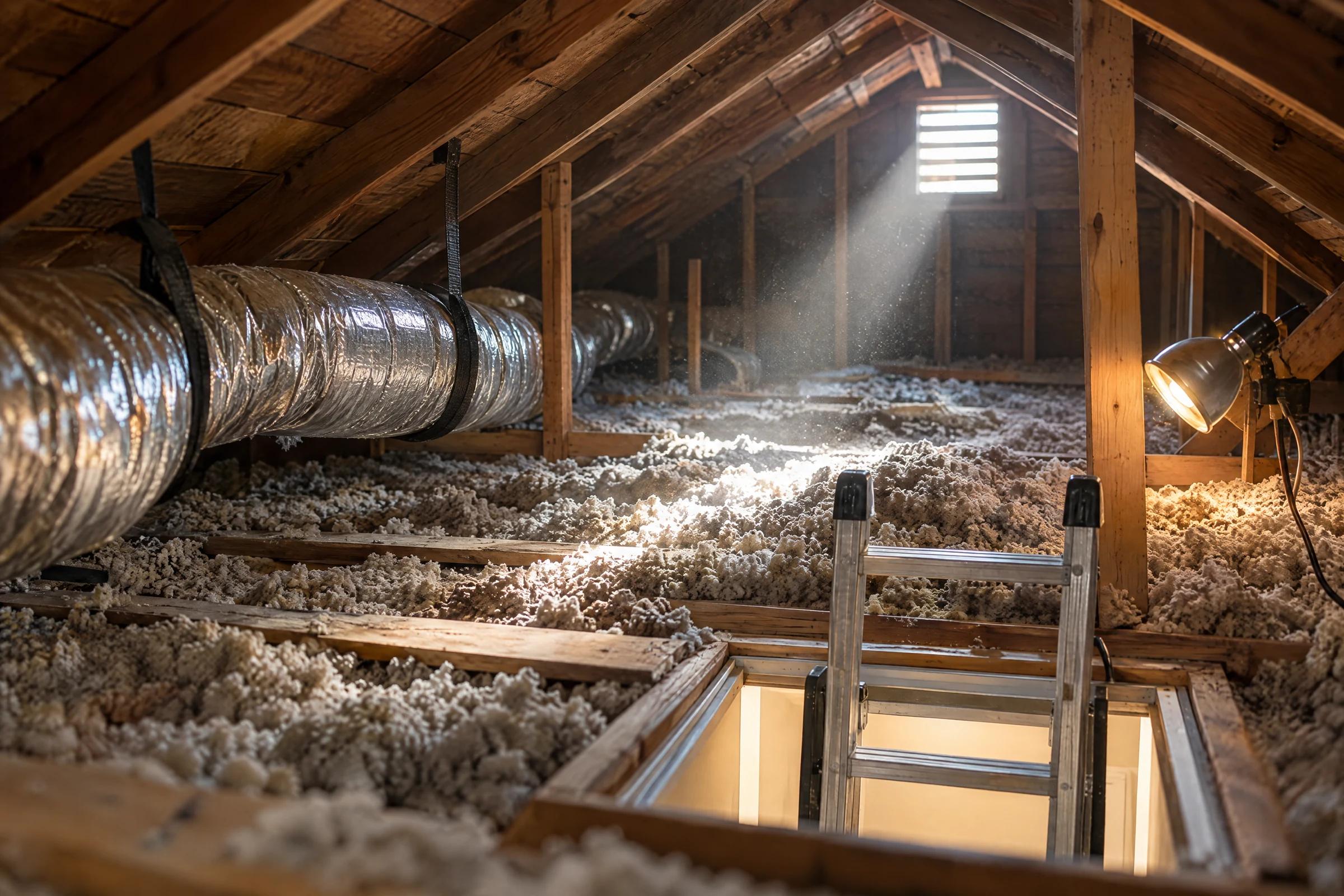
The scope is narrow and specific. The sellers page lists “HVAC system efficiency, age, and condition,” “Home envelope and duct performance,” “Attic insulation,” “Windows,” “Water efficiency measures,” “Solar screens and window shading” and “Opportunities for home energy improvements”; the FAQ describes the same visit as evaluating “the home's windows, window shading, attic insulation, air conditioning and heating system, low flow toilets, and the air duct system.” One sentence in the FAQ settles the question sellers ask most: “The ECAD ordinance does not require residential customers to invest in home energy efficiency improvements.” The report is a disclosure, not a repair list.
The residential ECAD audit at a glance
| Item | Figure or rule | Source |
|---|---|---|
| Estimated cost | $200 to $300 | Austin Energy sellers page and professionals page |
| Home the estimate assumes | Single-family, 1,800 square feet or smaller, one air conditioning system | Austin Energy sellers page |
| Pricing | ECAD energy professionals set their own prices | Austin Energy professionals page |
| Who performs it | RESNET Rater or BPI Building Analyst registered with Austin Energy | Austin Energy professionals page; Chapter 6-7 |
| What it covers | HVAC efficiency, age and condition; envelope and duct performance; attic insulation; windows; shading; water measures | Austin Energy sellers page |
| Improvements required | None | Austin Energy residential FAQ |
| Validity | 10 years after the audit is first performed | Austin Energy sellers page; Chapter 6-7 |
| Fine for non-compliance | Up to $500; up to $2,000 with criminal negligence | Section 6-7-42 |
Sources: Austin Energy ↗ · City of Austin Code of Ordinances ↗

Which Austin homes are exempt from the ECAD audit?
Austin Energy's exemptions page starts with the three property tests: “Your home is outside of the Austin city limits,” “Your property does not receive electric service from Austin Energy,” and “Your home is less than 10 years old at the time of sale.” A fourth covers manufactured housing: a home “built on a permanent chassis and designed for use without a permanent foundation,” which Section 6-7-13(B)(5) states the same way.
The program exemptions reward work already done. A home that within the last 10 years went through Home Energy Savings (formerly Home Performance with ENERGY STAR), the Weatherization Assistance program for low-to-moderate income customers, or the Rebates and Incentives program with “three or more energy efficiency improvements or received a minimum of $500 in residential energy efficiency upgrade rebates” does not need a new audit. Section 6-7-13(B)(2) writes the rebate test as having “performed at least three of the efficiency measures,” “performed all recommended efficiency measures, as determined by the director,” or “received from the Austin Electric Utility an energy efficiency rebate of not less than five hundred dollars ($500.00),” and Section 6-7-13(B)(4) adds a buyer-side route: a purchaser who signs an agreement to join the Free Weatherization Program “not later than six months after the time of sale.”
The transfer exemptions in Section 6-7-13(A) cover title changes that are not ordinary sales: “a foreclosure sale or trustee's sale, or a deed in lieu of foreclosure,” a pre-foreclosure sale to a lender for less than the mortgage balance, eminent domain, a transfer “from one family member to another family member without consideration,” a court order or probate, and a divorce decree, legal separation or property settlement. To document any exemption, Austin Energy says to “email ECAD or call 512-482-5346” with “the home's address and your Austin Energy Electric account number.” Keep the reply with the disclosure notice; a buyer's agent will ask for it. Homes newer than ten years are the largest exempt group, and the new construction guide covers the disclosures that apply to them instead.
Exemptions from the Austin residential ECAD audit
| Exemption | Condition | Code section |
|---|---|---|
| Newer home | Constructed no more than ten years before the time of sale | 6-7-13(B)(1) |
| Home Energy Savings | Participated within ten years and performed at least three efficiency measures, all recommended measures, or received a rebate of at least $500 | 6-7-13(B)(2) |
| Weatherization | Participated in the Free Weatherization Program within ten years | 6-7-13(B)(3) |
| Buyer weatherization agreement | Purchaser qualifies and agrees to join the program within six months after the sale | 6-7-13(B)(4) |
| Manufactured housing | Built on a permanent chassis, designed for use without a permanent foundation | 6-7-13(B)(5) |
| Foreclosure or deed in lieu | Foreclosure sale, trustee's sale, or deed in lieu of foreclosure | 6-7-13(A)(1) |
| Pre-foreclosure sale | Sale for less than the mortgage balance under an agreement with the lender | 6-7-13(A)(2) |
| Eminent domain | Transfer under or threatened by eminent domain | 6-7-13(A)(3) |
| Family transfer | From one family member to another without consideration | 6-7-13(A)(4) |
| Court or probate | Under a court order or probate proceedings | 6-7-13(A)(5) |
| Divorce or separation | Under a decree of legal separation, dissolution of marriage, or property settlement | 6-7-13(A)(6) |
Sources: Austin Energy ↗ · City of Austin Code of Ordinances ↗
Can Austin Energy rebates replace the ECAD audit?
Yes, when the work qualifies. Austin Energy's Home Energy Savings program begins with a “no-cost, in-home energy assessment” by a participating contractor, and its page states the exemption plainly: “Receive a Home Energy Savings participation document when you complete recommended upgrades through the Home Energy Savings program. If you sell your home, this document will exempt you” from the ordinance's reporting requirement. The participation document then travels with the seller's disclosure notice in place of an audit certificate.
The rebate schedule on that page, as of September 2026, pays $0.20 per square foot of floor area for air infiltration and duct sealing, attic insulation to R-38 at the attic's square footage times $0.03 times the R-value added plus a $45.00 setup fee, $1.00 per square foot for solar screens or film on single-pane windows, $50.00 for an eligible smart thermostat, $175.00 per system for an air conditioning tune-up (up to five systems), $3.25 per linear foot to replace ducts or $1.00 per linear foot to insulate existing ones, and $950 to $1,600 for a new air conditioner or heat pump across three efficiency tiers. Those figures change; check the page before counting on one.
Timing decides which route fits. An assessment, contractor scheduling and rebate paperwork take longer than a $200 audit, so a seller who plans to list within weeks should book the audit. An owner a year or two from selling can use the program to earn the exemption and improve the house at the same time, and a seller who seals leaking ducts before the audit will hand the buyer a better report. Either way, the FAQ's rule stands: no improvements are required by the ordinance, and the choice to make them is the owner's. Our guide to buying an older Austin home sets out the other age thresholds, from the 45-year historic review to pre-1978 lead paint, that travel with a house of the same vintage.
Sources: Austin Energy ↗
What happens if a seller skips the ECAD audit?
The code makes non-compliance an offense. Section 6-7-42 states that “A person commits a criminal offense if the person performs an act prohibited by this chapter or fails to perform an act required by this chapter. Each instance of a violation of this chapter is a separate offense.” On fines: “Proof of culpable mental state is not required for a fine of up to $500,” and “If the person acts with criminal negligence, a fine of up to $2,000.00 may be assessed.” Austin Energy's FAQ summarizes it as “a Class C misdemeanor with fines of up to $500 and $2,000.” Section 6-7-41 adds that “The record owner of property is presumed to be responsible for a violation of this chapter that occurs at a facility on the property.”
For a buyer, the practical remedy is contractual rather than criminal: ask for the audit or the exemption document at the start of the option period, which is what Austin Energy's advice to buyers amounts to. An audit already on file can be reused. The sellers page states that “Residential home energy audits meet the energy audit requirement for a period of 10 years after the audit is initially performed,” and the code adds “unless a more recent audit meeting the requirements of this chapter has been conducted.” A 2019 audit from the prior sale satisfies a 2026 sale; ask the seller for it before paying for a new one.
What the audit does not do is replace an inspection. TREC's disclosure notice says of itself that it “IS NOT A SUBSTITUTE FOR ANY INSPECTIONS OR WARRANTIES THE PURCHASER MAY WISH TO OBTAIN,” and the same holds for the ECAD report attached to it: it records duct leakage and attic insulation, not the roof, the foundation or the wiring. The property research desk lists the public records a buyer pulls alongside the inspection, and the permit history guide shows how to check whether the HVAC replacement an audit notes was permitted.
Sources: City of Austin Code of Ordinances ↗ · Austin Energy ↗ · Texas Real Estate Commission ↗
Where does the ECAD audit fit an Austin listing in fall 2026?
The market sets the stakes. Unlock MLS's August 2026 Central Texas Housing Report, released September 15, 2026, gives the City of Austin a median sale price of $560,000, down 4.3% from August 2025, on 844 closed sales, with 4,554 active listings, 4.6 months of inventory and an average close-to-list price of 93.3%, up from 91.6% a year earlier; across the five-county metro the ratio was 93.2% with 5.1 months of inventory. Vaike O'Grady, market research advisor at Unlock MLS, said in the release: “Austin is not immune to what is happening across the rest of the country, and August's housing data reflects some of the same affordability and interest rate pressures we're seeing nationwide.” Sellers are already conceding on price; a missing $200 to $300 report that stalls an option period is the wrong place to lose a buyer.
The sequence that keeps the audit off the critical path is short. Order it when you decide to sell and book the site visit before the photographer. Put the report and the Audit Certificate in the disclosure packet with Form 55-1, and confirm the auditor has sent the City its copy within 30 days. Deliver the packet with the notice at contract, which satisfies the 3-day rule automatically, and keep the exemption reply from Austin Energy in the same folder if the home qualifies for one instead. The market page carries the Unlock MLS figures each month so you can watch the close-to-list ratio a listing is priced against.
None of this predicts what a particular house will fetch; the audit is a compliance item, and the price is set by comparable closed sales. If you are weighing a sale of an Austin home built before 2016, bring the address to David and he can confirm whether ECAD applies, check for an audit already on file, and put the report on the listing calendar with the rest of the disclosures.
Sources: Unlock MLS ↗ · Austin Energy ↗ · City of Austin Code of Ordinances ↗
Common questions
Is an energy audit required to sell a house in Austin?
Yes, for a home within the Austin city limits, in the Austin Energy service area and 10 years old or older. Austin Energy's ECAD ordinance, Chapter 6-7 of the City Code, requires the seller to have an energy audit performed by an ECAD Energy Professional or to show proof of a qualifying Austin Energy program, and to give the buyer the results no later than 3 days before the option period ends.
How long is an ECAD audit good for?
Ten years. Austin Energy's sellers page states that residential home energy audits meet the requirement for a period of 10 years after the audit is initially performed, and Chapter 6-7 adds that a more recent audit replaces the older one. A seller whose home was audited at the last sale within the decade can reuse that report.
Do I have to make the improvements the ECAD audit recommends?
No. Austin Energy's residential FAQ says the ECAD ordinance does not require residential customers to invest in home energy efficiency improvements. The audit is a disclosure of the home's windows, shading, attic insulation, heating and cooling system, ducts and water fixtures; whether to act on it is the owner's choice, and rebates are available through Home Energy Savings if they do.
How much does an ECAD audit cost in Austin?
Austin Energy estimates about $200 to $300 for a typical single-family home of 1,800 square feet or smaller with one air conditioning system, and notes that ECAD energy professionals set their own prices. Larger homes and homes with more than one system take longer to test and cost more, so get more than one quote from the utility's directory of registered professionals.
Does a condo need an ECAD audit in Austin?
Yes. Austin Energy's FAQ states that individual owners selling their condominium must have an energy audit done as a residential customer under the ECAD ordinance, and Section 6-7-35 of the City Code applies the residential requirement to the owner of any number of units unless a multi-family audit of the whole building has been performed and is disclosed to the buyer before the sale.
Which seller's disclosure form applies in Texas in 2026?
TREC Form 55-1, the Seller's Disclosure Notice effective May 28, 2026 under Texas Property Code Section 5.008, which replaces Form 55-0. The statewide form does not ask about an energy audit; in Austin, the seller attaches the ECAD Audit Certificate, or the exemption document from Austin Energy, to that notice.
Take this to your next conversation
- Confirm all three tests for the address: inside the Austin city limits, on Austin Energy electric service, and 10 years old or older at the time of sale; if any fails, request the exemption reply from Austin Energy with the address and account number.
- Ask whether an audit from the last ten years or a Home Energy Savings participation document already exists before paying for a new one; if not, book a registered ECAD Energy Professional before the photographer.
- Put the audit report and Audit Certificate in the disclosure packet with TREC Form 55-1 and deliver it at contract, so the 3-days-before-the-option-period-ends rule is met without a calendar entry.
Sources and review date
Sources checked . Planning suggestions are editorial guidance; current property facts and requirements need an address-specific check.
- Austin Energy: ECAD for residential homes ↗
- Austin Energy: ECAD for sellers ↗
- Austin Energy: ECAD residential FAQs ↗
- Austin Energy: ECAD residential exemptions ↗
- Austin Energy: ECAD Energy Professionals ↗
- Austin Energy: The ECAD ordinance ↗
- City of Austin Code of Ordinances: Chapter 6-7, Energy Conservation (Supplement No. 163) ↗
- Austin Energy: Home Energy Savings rebates ↗
- Texas Real Estate Commission: Seller's Disclosure Notice, Form 55-1 ↗
- Texas Real Estate Commission: Form 55-1, Seller's Disclosure Notice (PDF) ↗
- Unlock MLS: August 2026 Central Texas Housing Report ↗