FIELD NOTES / BUYING IN AUSTIN
Bouldin Creek: an older cottage or a newer infill home?
The useful comparison goes beyond old versus new. Look at the ownership, outdoor space, documented work, and daily privacy of each Bouldin Creek property.
David Eimer — Austin Journal · Researched guide · 2 minute read · Published
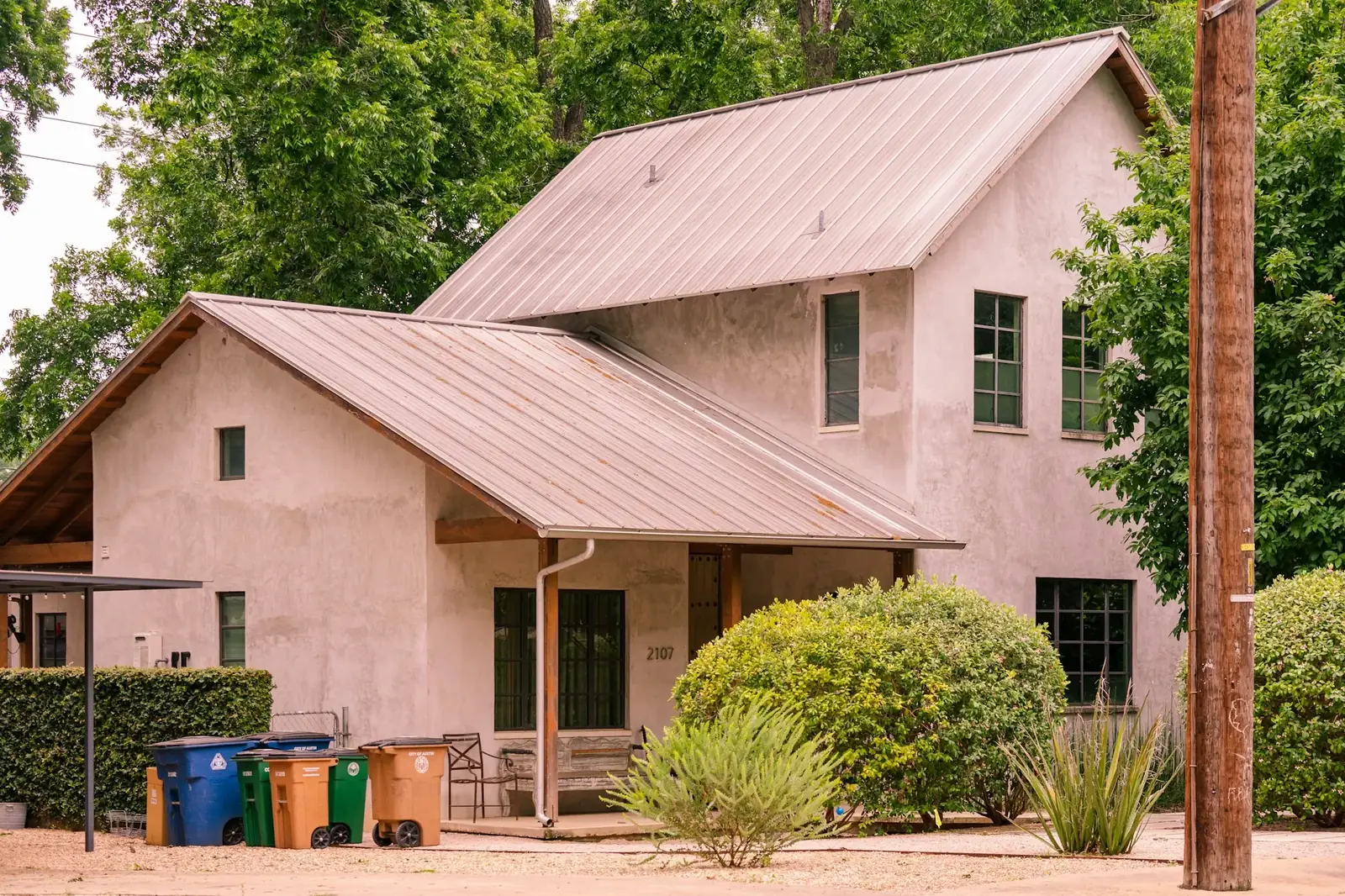
Residential architecture · Austin · Avi Werde · Unsplash
Begin with the property, not the architectural label
Bouldin Creek's adopted neighborhood plan is available through the City of Austin. It provides planning context, but it does not tell you the condition, ownership arrangement, or permitted alterations of an individual house. Keep the neighborhood research beside a separate file for the exact address. A cottage appearance and a contemporary façade are starting impressions, not completed investigations.
Draw the outdoor space you can actually use
During a showing, sketch the front door, parking, bins, patio, and neighboring windows. Ask which spaces belong exclusively to the property and whether any access is shared. Consider where you would sit outside and what can be seen from surrounding buildings. An attractive photograph may omit the route from the car or the relationship between a front and rear residence.
Ask what the renovation changed
For an older home, request a chronology of significant work rather than accepting renovated as a complete description. Compare the seller's account with available permits and inspection records. Austin's residential-plan-review resources direct researchers to permit information. A new kitchen may tell you little about drainage, roof condition, or earlier additions; a permit record does not by itself establish present condition.
Sources: City of Austin: residential plan review and permit research ↗
Ask what the newer home shares
For a newer residence, confirm whether it is part of a condominium regime and ask for the applicable documents. TREC's resale certificate covers important association information. Have your agent help identify the documents needed to understand maintenance and costs, and seek legal advice when the rights are unclear. Separate-looking buildings can still have shared obligations.
Make the choice around your tolerance for work
Compare the two homes using the same essentials: space that functions today, documented condition, outdoor use, carrying costs, and any work you would require. Get qualified estimates for material unknowns. If the older home's appeal depends on a major addition, or the newer home's appeal depends on exclusive outdoor use, resolve that assumption before treating the property as a fit.
Take this to your next conversation
- Sketch access and outdoor-space boundaries.
- Request a documented renovation history.
- Confirm any condominium regime and shared responsibilities.
Sources and review date
Sources checked . Planning suggestions are editorial guidance; current property facts and requirements need an address-specific check.
Prepared for the David Eimer Austin Journal from the linked sources.
Bring your questions