FIELD NOTES / A CLOSER LOOK
Buying a house in Austin: what the listing photos cannot tell you
Buying a house in Austin starts with photographs, but the decision should rest on the walkthrough, the TREC inspection and the public record. Austin-metro listings sat a median 73 days on market in August 2026 according to Realtor.com data on FRED, and Unlock MLS reports that the average August sale closed at 93.2% of its list price, so a buyer has time to look past the wide-angle lens. This guide covers what a licensed inspection does and does not check, what the Seller's Disclosure Notice must answer, and which City of Austin and Travis County records to pull before the option period ends.
By David Eimer · Austin Journal · 10 minute read · Published
The numbers
- Median days on market, Austin metro
- 73 daysAs of August 2026
Realtor.com listing data; Unlock MLS does not publish a days-on-market figure.
Source: FRED ↗
- Average close-to-list price, Austin metro
- 93.2%As of August 2026
Up from 92.2% in August 2025; 93.3% inside the City of Austin.
Source: Unlock MLS ↗
- Months of inventory
- 5.1 metro · 4.6 cityAs of August 2026
Source: Unlock MLS ↗
- Active listings with a price reduction, Austin metro
- 5,252 of 12,517As of August 2026
About 42% of Realtor.com's active count, computed from the two FRED series.
Source: FRED ↗
- Buyer's right to terminate after receiving the Seller's Disclosure Notice
- 7 daysAs of TREC Form 20-19, effective July 1, 2026
Paragraph 7B, when the notice was not received before the contract was signed.
Source: Texas Real Estate Commission ↗
- ECAD energy audit due to the buyer
- No later than 3 days before the option period endsAs of Austin City Code § 6-7-12
Homes 10 years old or older inside the city limits on Austin Energy service; audits stay valid ten years.
Buying a house in Austin in fall 2026: how much time do the photos leave you?
Buying a house in Austin in fall 2026 comes with more time to look than a spring market allows. Realtor.com's median days on market for Austin-metro listings was 73 in August 2026, per the series on FRED, and 5,252 of the 12,517 active listings Realtor.com counted carried a price reduction, about 42% by our computation. Unlock MLS reports 5.1 months of inventory for the metro and 4.6 for the City of Austin in its August 2026 release, and an average close-to-list price of 93.2% across the metro, up from 92.2% a year earlier.
Those numbers describe the metro, not the house in front of you, and they do not predict where prices go next. What they do say is that a buyer in Austin can usually afford to slow down: measure rooms, return at a second time of day, read the disclosure, and use the whole inspection window instead of waiving it. The September 2026 market post walks through the rate and price figures behind that, and the market page carries each Unlock MLS release as it comes out.
The time is written into the contract. TREC's One to Four Family Residential Contract (Resale), Form 20-19, effective July 1, 2026, gives the buyer “the unrestricted right to terminate this contract” within a negotiated number of days after the effective date, the Option Period, in exchange for an option fee delivered within 3 days of the effective date. Everything below is meant to fit inside that window.
Sources: FRED ↗ · Unlock MLS ↗ · Texas Real Estate Commission ↗
What does a TREC-licensed home inspection actually cover?
A home inspection in Austin is governed by the Texas Real Estate Commission's Standards of Practice, and it is narrower than most buyers expect. TREC rule 535.227 defines a real estate inspection as “a limited visual survey and basic performance evaluation of the systems and components of a building using normal controls,” and says it “is not intended to be a comprehensive investigation or exploratory probe to determine the cause or effect of deficiencies.”
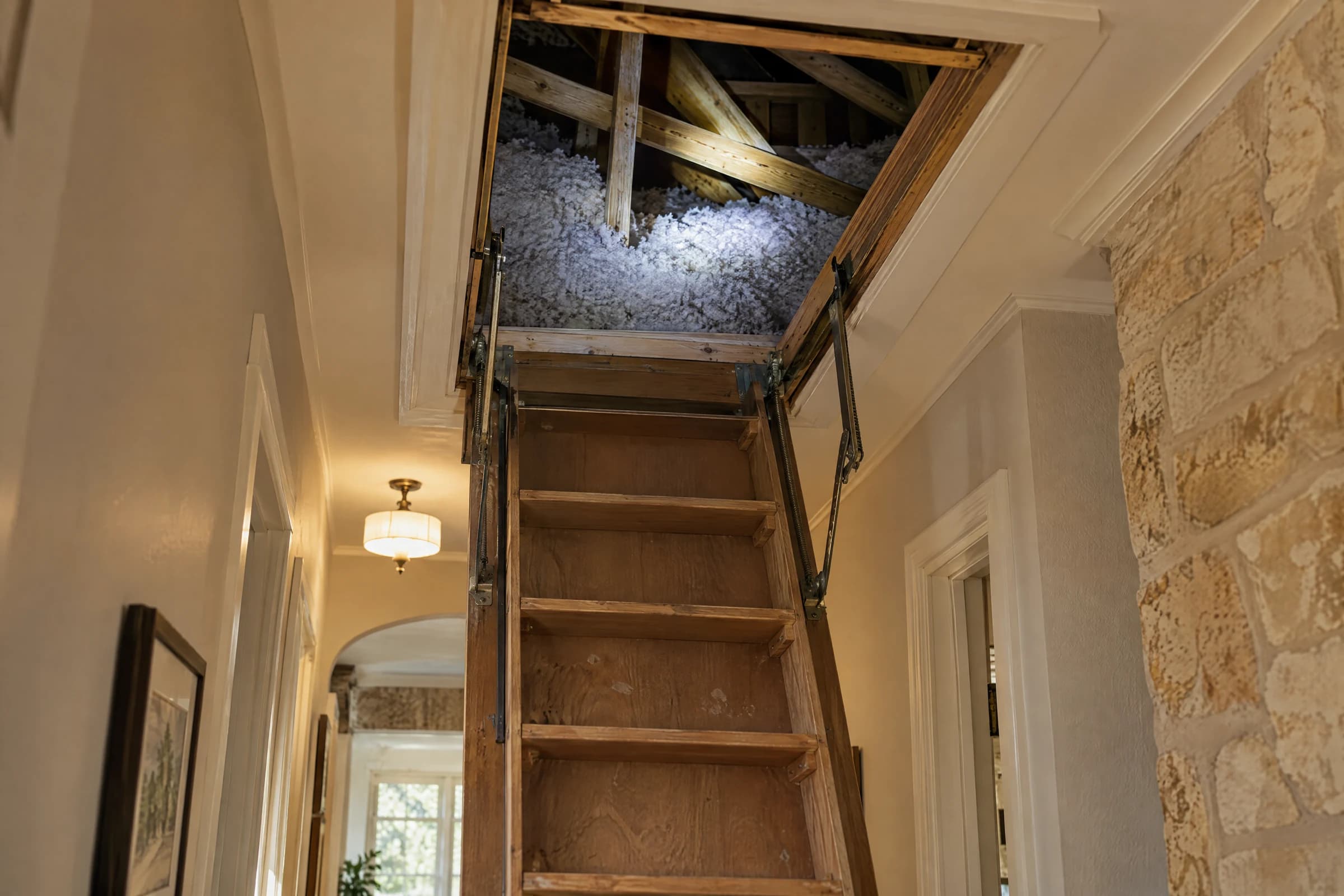
The rule lists tools an inspection does not require: thermal imaging equipment, moisture meters, gas or carbon monoxide detectors, elevation devices, ladders reaching more than one story, cameras for the interior of a drain or sewer line, and drones. Under its general limitations the inspector is not required to inspect anything “buried, hidden, latent, or concealed,” sub-surface drainage, detached buildings, fences or concrete flatwork, nor to determine the presence of termites, asbestos, lead paint or mold, a component's life expectancy, or compliance with any code. Each of those is a separate specialist if the house or the disclosure gives you a reason to call one.
What the inspector must do is complete TREC's Property Inspection Report, Form REI 7-6, marking each item Inspected, Not Inspected, Not Present or Deficient. A Deficient mark means a condition that “adversely and materially affects the performance of a system or component” or is a hazard to life, limb or property. The form's sections are the checklist a buyer should expect to see filled in.
Sections of TREC's Property Inspection Report, Form REI 7-6, and the items each lists
| Section | Items on the form |
|---|---|
| I. Structural systems | Foundations; grading and drainage; roof covering materials; roof structures and attics (with approximate insulation depth); walls; ceilings and floors; doors; windows; stairways; fireplaces and chimneys; porches, balconies, decks and carports |
| II. Electrical systems | Service entrance and panels; branch circuits, connected devices and fixtures (with type of wiring) |
| III. Heating, ventilation and air conditioning | Heating equipment; cooling equipment; duct systems, chases and vents |
| IV. Plumbing systems | Supply, distribution systems and fixtures (with static water pressure reading and supply pipe material); drains, wastes and vents; water heating equipment; hydro-massage equipment; gas distribution systems and gas appliances |
| V. Appliances | Dishwashers; food waste disposers; range hood and exhaust systems; ranges, cooktops and ovens; microwave ovens; mechanical exhaust vents and bathroom heaters; garage door operators; dryer exhaust systems |
| VI. Optional systems | Landscape irrigation systems; swimming pools, spas, hot tubs and equipment; outbuildings; private water wells; private sewage disposal systems; other built-in appliances |
Two details in the form matter for older Austin homes. Its hazards notice says conditions that met the code when the house was built, such as missing GFCI protection, ordinary glass where safety glass is now standard, or unbonded gas piping, are still reported as Deficient if they can reasonably be determined. And the form states that Deficient items “DO NOT obligate any party to make repairs”; they are information for the negotiation, not a repair order.
Sources: Texas Real Estate Commission ↗
What does the Seller's Disclosure Notice tell an Austin buyer, and what does it not?
The Seller's Disclosure Notice is the seller's written answer to a fixed list of questions about an Austin house, and it comes with a limit printed at the top. TREC's Form 55-1, effective May 28, 2026, states that it “IS NOT A SUBSTITUTE FOR ANY INSPECTIONS OR WARRANTIES THE PURCHASER MAY WISH TO OBTAIN” and “IS NOT A WARRANTY OF ANY KIND BY SELLER OR SELLER'S AGENTS.” It records what the seller knows as of the date signed, nothing more.
What the seller answers on TREC's Seller's Disclosure Notice, Form 55-1
| Section | What the seller answers |
|---|---|
| 1. Items on the property | Yes, No or Unknown for appliances, gutters, alarms, central heat and air, plumbing and septic, pool and spa, fireplaces, gas lines and fuel gas piping type, garage, water heater, water supply, roof type and approximate age; then whether any are not working, defective or in need of repair |
| 2. Known defects or malfunctions | Interior and exterior walls, ceilings, floors, doors, windows, roof, foundation or slab, sidewalks, walls and fences, driveways, plumbing, sewers and septics, electrical systems, lighting fixtures, other structural components |
| 3. Smoke detectors | Whether working smoke detectors are installed as Chapter 766 of the Health and Safety Code requires |
| 4. Conditions | Active termites or termite damage, previous termite treatment, improper drainage, water damage not due to a flood, landfill or settling or soil movement or fault lines, previous structural or roof repair, hazardous waste, asbestos, urea-formaldehyde insulation, radon, lead-based paint, aluminum wiring, previous fires, unplatted easements, subsurface structures or pits, previous methamphetamine manufacture |
| 5. Repairs needed | Any item, equipment or system in or on the property in need of repair |
| 6. Flood conditions | Present flood insurance, previous flooding from a reservoir release or breach, previous water penetration from a natural flood event, and whether the property is wholly or partly in a 100-year floodplain, 500-year floodplain, floodway, flood pool or reservoir |
| 7. and 8. Flood claims and assistance | Whether the seller has ever filed a flood insurance claim, including with the NFIP, or received FEMA or SBA flood assistance for the property |
| 9. Other matters | Unpermitted additions or alterations, HOA fees, common areas, notices of violations, lawsuits, conditions affecting health or safety, rainwater systems over 500 gallons on public water, groundwater or subsidence districts, conservation easements, current insurance and windstorm insurance, inability to insure, a private road the seller maintains, above- or underground storage tanks |
| 10. and 11. Coastal and military notices | Open Beaches Act and Dune Protection Act notice for coastal property; a notice that the property may lie near a military installation |
Read it against the photographs. A “Yes” beside Improper Drainage, Previous Structural or Roof Repair, or alterations “made without necessary permits” points to where the inspection should slow down, and the roof age the seller writes in Section 1 sets a question for the inspector, who is not required to estimate remaining roof life. The 2026 form also added lines that matter in Central Texas: conservation easements, whether the property is presently insured, whether the seller “has been unable to insure the Property for any reason,” a private road the seller pays to maintain, and storage tanks.
Timing is protected in the contract. Under Paragraph 7B of Form 20-19, if the buyer has not received the notice at signing, the seller must deliver it within an agreed number of days, and the buyer “may terminate this contract for any reason within 7 days after Buyer receives the Seller's Disclosure Notice or prior to the closing, whichever first occurs,” with the earnest money refunded. Ask for the notice before you write the offer so those 7 days do not overlap the option period.
Sources: Texas Real Estate Commission ↗
How do you walk an Austin house that the photographs flattered?
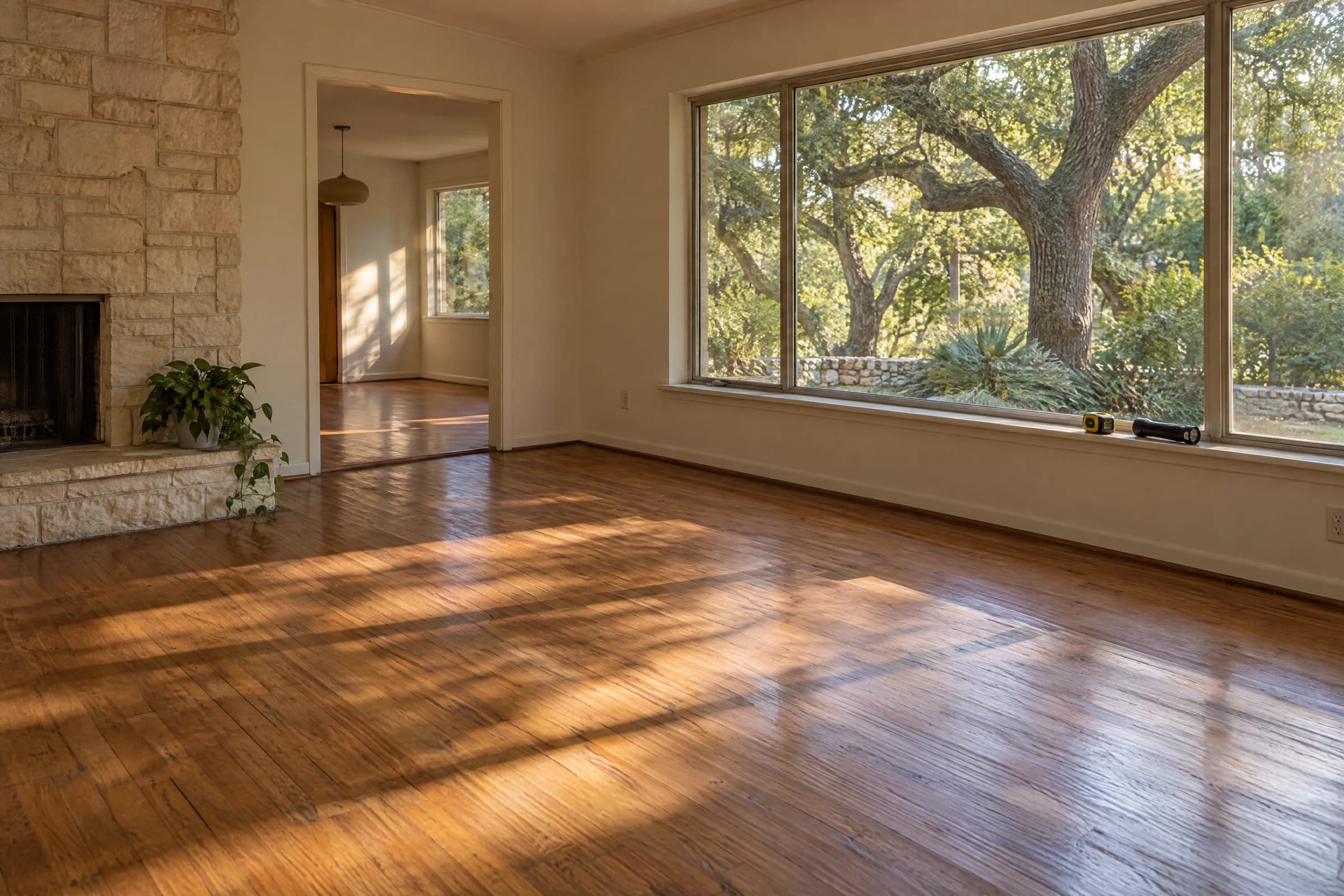
Walking an Austin house well means testing what a wide-angle lens hides: distance, slope, light and sound. Start with the transitions the listing skipped, from parking to the front door, from the kitchen to wherever a table would sit, from bedrooms to the shared rooms, and bring a tape measure for furniture you intend to keep, because a lens that fits a whole room into one frame makes the space between things hard to judge.
Then stop talking for a minute in each room. Notice which windows face west into the afternoon heat, what you hear with the air conditioning off, any odor that suggests moisture, and where paint is newer than the wall around it. None of that is a diagnosis; it is a list of questions for the inspector, who under TREC's rule must report “evidence of water penetration” in walls, ceilings, floors, roof and attic but is not required to determine its cause.
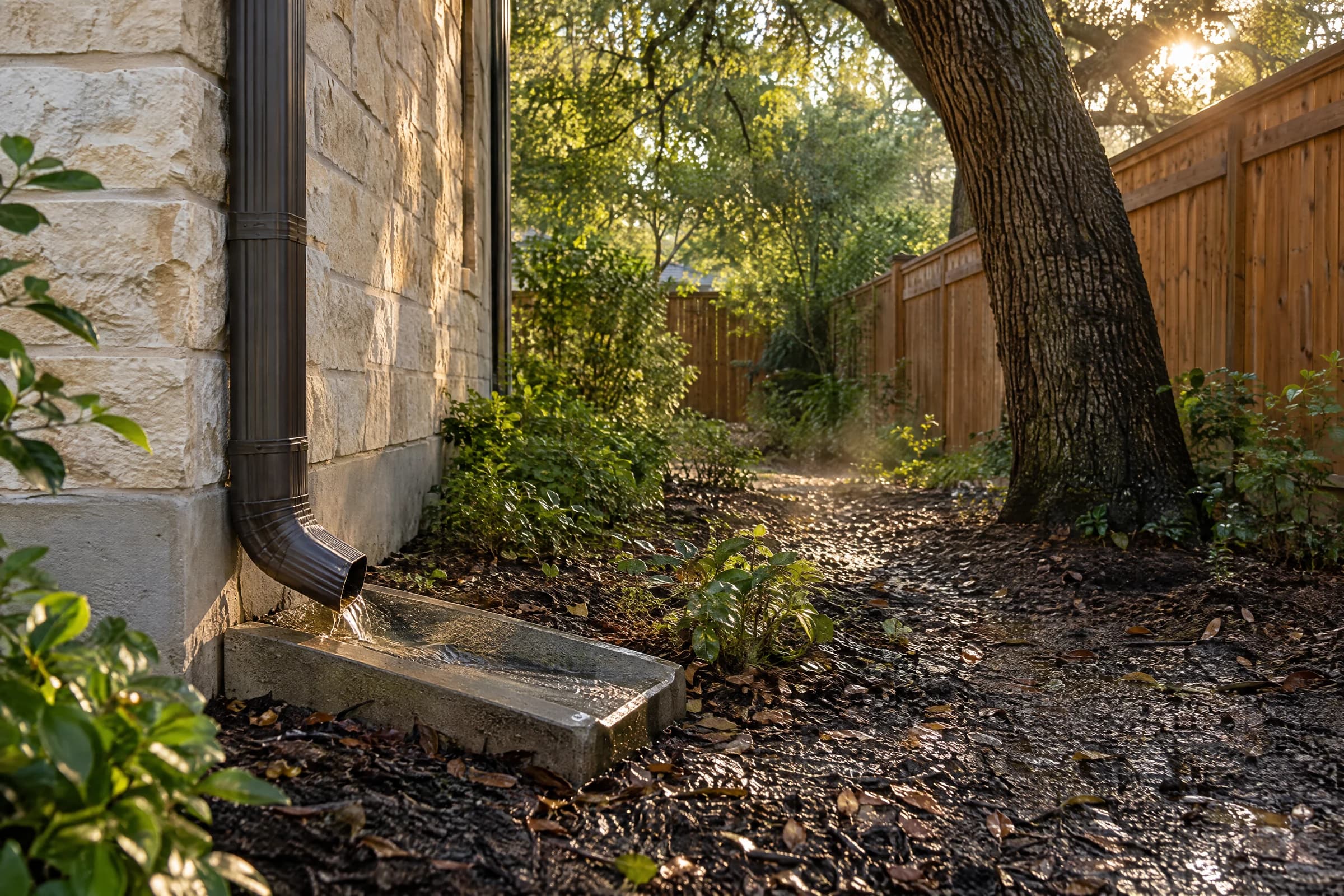
Outside, look beyond the crop. TREC's grading-and-drainage standard requires the inspector to report as Deficient “drainage around the foundation that is not performing” and deficiencies in grade levels and in gutters and downspouts, but not to “determine area hydrology or the presence of underground water.” So walk the lot yourself after rain if you can, note where water would travel from neighboring roofs and slopes, and look at the trees: the City of Austin regulates trees 19 inches or more in diameter on residential property, and the tree rules that shape renovation plans are worth reading before a canopy wins you over.
Afterward, split the notes into preferences and unknowns. Paint colors and a dated kitchen are preferences you can price. A stain with no explanation, a door that binds, a slab crack, a downspout that empties at the foundation: those are unknowns that go to the inspector, the disclosure, or a specialist before the option period closes.
Sources: Texas Real Estate Commission ↗ · City of Austin Development Services ↗
Which Austin public records should you pull before the option period ends?
Public records answer questions about an Austin house that neither the seller nor the inspector is required to. Three City and county tools cover most of them, all free, and the property research desk lists them in the order a buyer should open them.
Free public records to open for an Austin address during the option period
| Record | Publisher | What it gives you |
|---|---|---|
| Property search | Travis Central Appraisal District | Search by owner name, property address, account number or DBA, plus a map search; current-year values are “a work in progress,” prior years informational only |
| Property Profile | City of Austin | Map layers for zoning, FEMA and fully developed floodplain, easement polygons, building and tree permits, 2023 impervious cover, 2022 tree canopy, slopes over 15 percent, creek buffers and Edwards Aquifer zones |
| FloodPro | Austin Watershed Protection | Whether the property is in a floodplain, elevation certificates, FEMA map change research, printable floodplain maps, storm drain and floodplain models |
| ECAD status and audit | Austin Energy | Whether the home is subject to the energy audit ordinance (city limits, Austin Energy service, 10 years old or older); the seller delivers the audit no later than 3 days before the option period ends |
| Seller's Disclosure Notice | The seller, on TREC Form 55-1 | The seller's knowledge of the items and conditions in the table above; the buyer may terminate within 7 days of receiving it if it arrived after the contract |
| Property Inspection Report | A TREC-licensed inspector, on Form REI 7-6 | Each system marked Inspected, Not Inspected, Not Present or Deficient, with comments |
The Travis Central Appraisal District's property search takes an owner name, address or account number and returns the appraisal record, with TCAD's note that “Information relating to the current year should be considered a work in progress.” The City of Austin's Property Profile map layers include zoning, FEMA and fully developed floodplains, easement polygons, building and tree permits, 2023 impervious cover, 2022 tree canopy and slopes over 15 percent, per the City's June 2026 layer list, with the City's caution that “some data may not reflect recent changes or updates.” The permit history guide shows how to read the permit layer against a renovated kitchen or addition. FloodPro is where to “find out if your Austin property is in a floodplain” and look up elevation certificates, and the flood map guide explains what the zones mean for insurance.
One record is the seller's job to produce. Austin Energy's Energy Conservation Audit and Disclosure ordinance applies to homes “within the Austin city limits,” in Austin Energy's service area and “10 years old or older.” Under City Code Chapter 6-7 the seller must give the buyer the energy audit “no later than 3 days prior to the termination of the option period,” and an audit may be used for ten years after it is performed. Homes built within the last ten years, and homes that completed qualifying Austin Energy programs in the last ten years, are exempt. The ECAD guide for sellers covers the paperwork; as a buyer, ask for the audit or the exemption document on day one.
Sources: Travis Central Appraisal District ↗ · City of Austin Development Services ↗ · City of Austin ↗ · City of Austin Watershed Protection ↗ · Austin Energy ↗ · Austin City Code Chapter 6-7, Energy Conservation (ECAD ordinance), as published by Austin Energy (PDF) ↗
What does an Austin inspection report obligate anyone to do?
An inspection report in Austin obligates no one to fix anything; it changes what the buyer knows and what the buyer can ask for. TREC's report form says so directly, and the resale contract backs it up: under Paragraph 7D the buyer accepts the property “As Is,” meaning “the present condition of the Property with any and all defects,” and that acceptance “does not preclude Buyer from inspecting the Property under Paragraph 7A, from negotiating repairs or treatments in a subsequent amendment, or from terminating this contract during the Option Period, if any.”
The practical sequence is short. Book the inspection for the first days of the option period, because the report form recommends that further evaluations and cost estimates “take place prior to the expiration of any contractual time limitations, such as option periods.” Bring the Deficient items that matter, with specialist bids where you got them, into a repair amendment, a price change, or a decision to walk. If a lender later requires repairs, Paragraph 7E lets the buyer terminate when their cost exceeds 5% of the sales price, and Paragraph 7F requires agreed repairs to be completed before closing by licensed persons, with any required permits.
What none of this tells you is whether the house is worth its price. That comes from closed comparable sales, which the Unlock MLS figures above only summarize at the metro and county level. The payment estimator on the homes page will turn an asking price into a monthly figure, but the comparables are a conversation. If you want the disclosure, the inspection report and the parcel's records read together for one address, bring the listing and David can pull the comparable closings and the City records for it.
Sources: Texas Real Estate Commission ↗ · Unlock MLS ↗
Common questions
How long is the option period when buying a house in Austin?
The TREC resale contract, Form 20-19, does not fix a number of days; the buyer and seller write one in. In exchange for an option fee delivered within 3 days after the effective date, the buyer gets “the unrestricted right to terminate this contract” by notice within that many days. Inspections, specialist evaluations and cost estimates should all be finished before it expires, because after that the earnest money is no longer protected by the option.
Is a home inspection required to buy a house in Texas?
No. Paragraph 7A of the TREC contract gives the buyer the right to have the property inspected by inspectors licensed by TREC, but nothing requires it. If you do inspect, TREC's Standards of Practice define the job as “a limited visual survey and basic performance evaluation,” and they do not require thermal imaging, moisture meters, sewer cameras or drones, so ask what the inspector includes beyond the minimum.
What does a seller have to disclose when selling a house in Texas?
Sellers of a previously occupied single-family home complete TREC's Seller's Disclosure Notice, Form 55-1 (effective May 28, 2026), which covers 11 sections: items on the property, known defects, smoke detectors, conditions such as drainage, termites and soil movement, repairs needed, flood conditions and claims, unpermitted work, HOA fees, lawsuits, insurance and storage tanks, plus coastal and military notices. The form is the seller's knowledge as of the signing date and states that it is not a warranty and not a substitute for inspections.
Does a home inspector check for flooding in Austin?
Only at the foundation. TREC rule 535.228 requires the inspector to report as Deficient drainage around the foundation that is not performing, deficient grade levels and deficient gutters and downspouts, but not to determine area hydrology or underground water. For the floodplain itself, use the City of Austin's FloodPro tool and Section 6 of the Seller's Disclosure Notice, which asks whether the property is wholly or partly in a 100-year or 500-year floodplain, floodway, flood pool or reservoir.
Is fall 2026 a good time to buy a house in Austin?
That depends on the specific house, its price against closed comparable sales, and your financing, not on the metro averages. The averages do show room to work: Realtor.com's median days on market was 73 in August 2026, about 42% of active listings carried a price cut, and Unlock MLS reports the average sale closed at 93.2% of list. This post does not forecast prices or rates.
Take this to your next conversation
- Ask for the Seller's Disclosure Notice and the ECAD audit or exemption document before writing the offer, so the 7-day and 3-day clocks do not eat into the option period.
- Book the TREC inspection for the first days of the option period and line up specialists (sewer camera, foundation, roof) for anything marked Deficient that the standards say the inspector cannot determine.
- Open TCAD, the City's Property Profile and FloodPro for the address the same day, and note zoning, floodplain, permits and impervious cover next to what the seller disclosed.
Sources and review date
Sources checked . Planning suggestions are editorial guidance; current property facts and requirements need an address-specific check.
- FRED: Realtor.com median days on market, Austin metro (MEDDAYONMAR12420) ↗
- FRED: Realtor.com active listing count, Austin metro (ACTLISCOU12420) ↗
- FRED: Realtor.com price-reduced listing count, Austin metro (PRIREDCOU12420) ↗
- Unlock MLS: August 2026 Central Texas Housing Report, released September 15, 2026 ↗
- Texas Real Estate Commission: One to Four Family Residential Contract (Resale), Form 20-19, effective July 1, 2026 ↗
- Texas Real Estate Commission: Form 20-19 contract text (PDF), Paragraphs 5 and 7 ↗
- Texas Real Estate Commission: TREC Rules, 22 TAC §§ 535.227 and 535.228, Standards of Practice for inspectors ↗
- Texas Real Estate Commission: Property Inspection Report, Form REI 7-6 (PDF) ↗
- Texas Real Estate Commission: Seller's Disclosure Notice, Form 55-1, effective May 28, 2026 ↗
- Texas Real Estate Commission: Seller's Disclosure Notice, Form 55-1 (PDF) ↗
- Travis Central Appraisal District: Property Search ↗
- City of Austin Development Services: Property Profile overview ↗
- City of Austin: Property Profile layers, June 2026 (PDF) ↗
- City of Austin Watershed Protection: View floodplain maps and storm drain infrastructure (FloodPro) ↗
- Austin Energy: ECAD for residential customers ↗
- Austin Energy: ECAD exemptions for home sellers ↗
- Austin City Code Chapter 6-7, Energy Conservation (ECAD ordinance), as published by Austin Energy (PDF) ↗
- City of Austin Development Services: Trees on residential property ↗