FIELD NOTES / THE CONSIDERED SALE
Sell my house in Austin: what to do before the photographer arrives
“Sell my house in Austin” is the search, but the sale starts weeks before the listing photographs, with paperwork buyers now expect on day one. Unlock MLS reports that the average Austin-metro sale in August 2026 closed at 93.2% of its list price with 5.1 months of inventory, and Realtor.com's median listing sat 73 days on market, so a home has to be ready when it appears rather than after. This guide covers the Seller's Disclosure Notice, the ECAD energy audit, which repairs need a City of Austin permit, the Austin Energy and Austin Water rebates worth claiming first, and how to prepare rooms for an honest photograph.
By David Eimer · Austin Journal · 10 minute read · Published
The numbers
- Average close-to-list price, Austin metro
- 93.2%As of August 2026
Up from 92.2% in August 2025; 93.3% inside the City of Austin, up from 91.6%.
Source: Unlock MLS ↗
- Active listings and months of inventory, Austin metro
- 13,676 · 5.1 monthsAs of August 2026
City of Austin: 4,554 active listings and 4.6 months. New listings metro-wide: 3,579, down 7.0% year over year.
Source: Unlock MLS ↗
- Median days on market, Austin metro
- 73 daysAs of August 2026
Realtor.com listing data; 5,252 of 12,517 active listings carried a price reduction, about 42% (computed).
Source: FRED ↗
- Buyer's right to terminate after a late Seller's Disclosure Notice
- 7 daysAs of TREC Form 20-19, effective July 1, 2026
Paragraph 7B; the clock runs from the day the buyer receives the notice.
Source: Texas Real Estate Commission ↗
- ECAD audit due to the buyer
- No later than 3 days before the option period endsAs of Austin City Code § 6-7-12
Applies to homes 10 years old or older inside the city limits on Austin Energy service; an audit is good for ten years.
- Home Energy Savings program, typical summer bill reduction
- 20% on averageAs of Austin Energy page reviewed September 2, 2025
Homes 10 years old or older, at least three qualifying upgrades and $100 in rebates; completion exempts the home from ECAD.
Source: Austin Energy ↗
- WaterWise Landscape rebate, Austin Water
- Up to $1,750As of September 26, 2026
To convert turfgrass to native and adapted plant beds; approval required before work begins.
Source: City of Austin Watershed Protection and Austin Water ↗
Sell my house in Austin in fall 2026: what does the market ask of a listing?
Selling a house in Austin in fall 2026 means listing into a market that gives buyers time and choices. Unlock MLS's August 2026 Central Texas Housing Report counts 13,676 active listings across the metro and 4,554 inside the City of Austin, 5.1 and 4.6 months of inventory, and 3,579 new listings in the month, down 7.0% from a year earlier. The average sale closed at 93.2% of its list price metro-wide and 93.3% in the city, both up about a point from August 2025.
Realtor.com's listing data on FRED adds the pace: a median 73 days on market for Austin-metro listings in August 2026, and 5,252 of 12,517 active listings with a price reduction, about 42% by our computation. Those cuts are what happens to homes that arrive before they are ready, or that are priced against other asking prices instead of closed sales. The September 2026 market post has the county-by-county figures, and the market page carries each monthly release as Unlock MLS publishes it.
None of this forecasts what your house will bring. It does set the job: a listing that appears with its disclosure complete, its energy audit in hand, its permits reconciled and its rooms legible, so the first two weeks of showings are spent on offers rather than on questions. The selling page describes how that sequence is run.
Sources: Unlock MLS ↗ · FRED ↗
Which Austin disclosures must be ready before the listing goes live?
Every Austin seller of a previously occupied single-family home completes TREC's Seller's Disclosure Notice, and the version that applies now is Form 55-1, effective May 28, 2026. The notice states the seller's knowledge of the property as of the date signed; it “IS NOT A SUBSTITUTE FOR ANY INSPECTIONS OR WARRANTIES THE PURCHASER MAY WISH TO OBTAIN” and “IS NOT A WARRANTY OF ANY KIND BY SELLER OR SELLER'S AGENTS.” Filling it in early is the fastest way to find the repairs and records a buyer will ask about.
Paperwork an Austin seller should finish before the listing photographs
| Item | Rule | When to have it done |
|---|---|---|
| Seller's Disclosure Notice | TREC Form 55-1, effective May 28, 2026; a buyer who receives it after the contract may terminate within 7 days of receipt (Form 20-19, Paragraph 7B) | Complete before listing; deliver with the listing or before offers |
| ECAD energy audit or exemption | Homes 10 years old or older inside the city limits on Austin Energy service; audit valid ten years; due to the buyer no later than 3 days before the option period ends (City Code § 6-7-12) | Check status in week one; book the audit or gather exemption documents before the shoot |
| Lead-based paint disclosure | Required by federal law for a dwelling built before 1978 (Form 20-19, Paragraph 7C) | With the disclosure |
| Permit record | Form 55-1, Section 9 asks about alterations or repairs made without necessary permits; the City exempts finish work and repairs of 128 square feet or less from a building permit | Reconcile past work before listing; permit anything new that is not exempt |
| Smoke detectors | Form 55-1, Section 3 asks whether working smoke detectors are installed as Chapter 766 of the Health and Safety Code requires | Fix before the photographs |
The timing rule is in the contract. Under Paragraph 7B of TREC's resale contract, Form 20-19, a buyer who receives the notice after signing “may terminate this contract for any reason within 7 days after Buyer receives the Seller's Disclosure Notice or prior to the closing, whichever first occurs,” with the earnest money refunded. A notice delivered with the listing avoids handing every buyer a second exit.
The second document is local. Austin Energy's Energy Conservation Audit and Disclosure ordinance covers homes “within the Austin city limits,” on Austin Energy service and “10 years old or older.” City Code § 6-7-12 requires the seller to give the buyer the audit “no later than 3 days prior to the termination of the option period,” and an audit performed under the ordinance “may be used to meet the energy audit requirements of this chapter for a period of ten years.” Sellers are exempt if the home is less than ten years old, or if within the last ten years it went through Austin Energy's Home Energy Savings program, received three or more efficiency improvements or at least $500 in Austin Energy rebates, or took part in Weatherization Assistance. The ECAD guide walks through checking status; do it before the photographer is booked, because the audit needs a certified ECAD Energy Professional and a site visit.
Sources: Texas Real Estate Commission ↗ · Austin Energy ↗ · Austin City Code Chapter 6-7, Energy Conservation (ECAD ordinance), as published by Austin Energy (PDF) ↗
Which repairs need a City of Austin permit before you sell?
Repairs before an Austin sale fall into two groups, work the City exempts from a building permit and work that needs one, and the disclosure asks about both. Section 9 of Form 55-1 asks whether the seller is aware of “room additions, structural modifications, or other alterations or repairs made without necessary permits or not in compliance with building codes in effect at that time,” so an unpermitted addition is a disclosure, not a secret.
The City's list of work exempt from a building permit covers most pre-listing cosmetic jobs: “Painting, papering, tiling, carpeting, cabinets, countertops, and similar finish work”; a gypsum board repair of up to 128 square feet outside a fire-rated or shear-wall assembly; a foundation repair or floor decking repair that does not exceed 128 square feet; a replacement roof covering that does not affect the roof structure, unless the property is in the Wildland-Urban Interface and half or more of the roof is replaced; fences up to 7 feet; retaining walls up to 4 feet; and driveways or flatwork outside the public right-of-way. The City adds that exempt work “must still comply with applicable Building Codes, City Codes, and all other applicable ordinances.”
Residential work the City of Austin exempts from a building permit
| Work | Exempt when |
|---|---|
| Painting, papering, tiling, carpeting, cabinets, countertops and similar finish work | Always; the work must still comply with the building code |
| Gypsum board repair | 128 square feet or less and not part of a fire-resistance-rated, shear-wall or tub and shower assembly |
| Foundation repair | 128 square feet or less |
| Floor decking repair | 128 square feet or less |
| Roof covering replacement | It does not adversely affect the roof structure, unless the property is in the Wildland-Urban Interface and 50% or more of the roofing is replaced |
| Fence | Not over 7 feet high and not in a flood hazard area |
| Retaining wall | Not over 4 feet from the bottom of the footing to the top, not supporting a surcharge, not in a flood hazard area |
| Detached accessory structure | No more than 200 square feet and 15 feet high, no dwelling, no plumbing, not in a flood hazard area |
| Deck | No more than 200 square feet, no more than 30 inches above grade, not attached to the dwelling, no egress, not in a flood hazard area |
| Sidewalk, driveway or concrete flatwork | Not in the public right-of-way |
Anything larger, and any electrical, plumbing or mechanical change, belongs in the permit record a buyer will pull. The permit history guide shows what that record looks like from the buyer's side. If a buyer later negotiates repairs, Paragraph 7F of the contract requires them to be completed before closing “by persons who are licensed to provide such repairs or treatments” with any required permits obtained, so doing the work now, properly, is the same job on your own calendar.
Sources: Texas Real Estate Commission ↗ · City of Austin Development Services ↗
What should be decided before anything is moved?
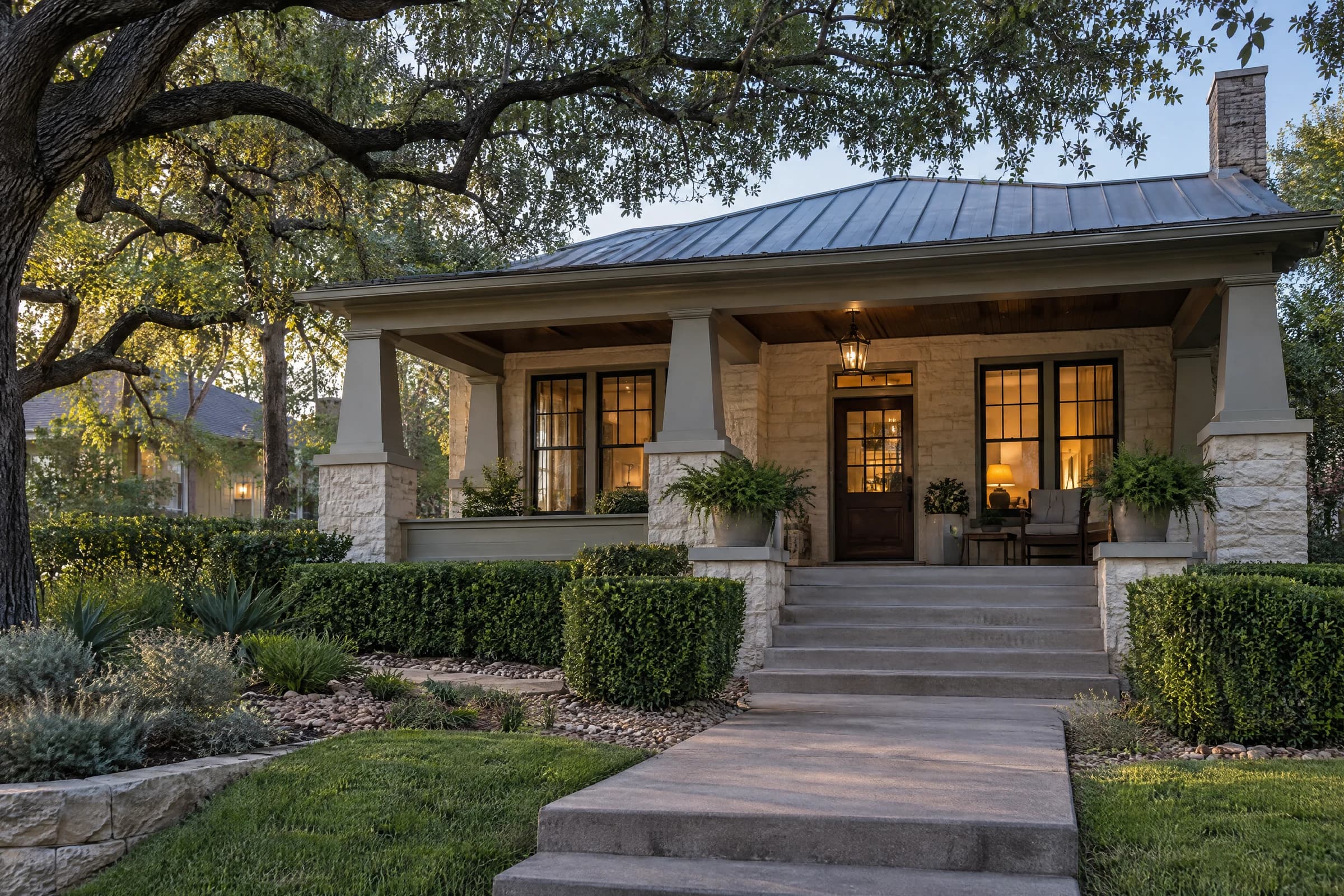
A pre-listing plan for an Austin house starts with a walk-through and a short list, not a long one. Go room by room with your agent and decide what each space needs to communicate, which repairs change how a buyer's inspector will mark the house, and which are preferences a buyer will price for themselves.
The buyer's inspection is a useful frame. A TREC-licensed inspector fills in Form REI 7-6 section by section, marking foundations, grading and drainage, roof, attic insulation depth, walls, doors, windows, electrical panels and circuits, heating and cooling, plumbing with a static pressure reading, water heater and appliances as Inspected, Not Inspected, Not Present or Deficient. Conditions the standards call Deficient, such as missing GFCI protection, an attached-garage door without a self-closing device, insulated windows that are “obviously fogged,” or “drainage around the foundation that is not performing,” are cheap to fix before the photographs and expensive to argue about in an amendment. The buyer-side guide, what the listing photos cannot tell you, lists what buyers are told to check.
Then set a timeline and a budget. Repairs that need parts, licensed trades or a rebate inspection come first; cleaning, decluttering and staging come last, in the week before the shoot. A realistic two-page plan beats an unfocused list that runs into the listing date.
Sources: Texas Real Estate Commission ↗
Which Austin Energy and Austin Water rebates are worth claiming before listing?
Austin's two utilities pay for some of the work a seller was going to do anyway, and one of them clears the ECAD requirement at the same time. Austin Energy's Home Energy Savings program is open to homes “10 years old or older” on Austin Energy residential service, with a minimum of three qualifying upgrades and at least $100 in rebates; Austin Energy says the improvements “typically lower summer energy bills by an average of 20%,” and completing the recommended upgrades earns a participation document that exempts the home from ECAD reporting.
Austin Energy and Austin Water residential rebates that overlap with pre-listing work
| Utility | Improvement | Rebate |
|---|---|---|
| Austin Energy, Home Energy Savings | Air infiltration and duct sealing | $0.20 per sq ft of floor area |
| Austin Energy, Home Energy Savings | Attic insulation to R38 | Attic sq ft × $0.03 × R-value added, plus a $45.00 setup fee |
| Austin Energy, Home Energy Savings | Duct replacement / insulating existing duct | $3.25 per linear foot / $1.00 per linear foot |
| Austin Energy, Home Energy Savings | AC tune-up (up to 5 systems) | $175.00 each |
| Austin Energy, Home Energy Savings | Solar screens or film on single-pane windows | $1.00 per sq ft |
| Austin Energy, Home Energy Savings | Eligible smart thermostat | $50.00 each |
| Austin Energy, Home Energy Savings | New central air conditioner, Tier 1 to Tier 3 | $950 to $1,450 |
| Austin Energy, Home Energy Savings | New heat pump, Tier 1 to Tier 3 | $1,000 to $1,600 |
| Austin Water | WaterWise Landscape (turf to native and adapted beds) | Up to $1,750 |
| Austin Water | WaterWise Rainscape | Up to $500 per property |
| Austin Water | Irrigation upgrade | Up to $1,000 |
| Austin Water | Rainwater harvesting | Up to $5,000 |
| Austin Water | Compost, mulch and core aeration | Up to $120 |
| Austin Water | Pressure regulating valve | Up to $150 |
Austin Water's rebates run to the yard: up to $1,750 to convert turfgrass to native and adapted plant beds under WaterWise Landscape, up to $500 for a WaterWise Rainscape, up to $1,000 for an irrigation upgrade, up to $150 toward a pressure regulating valve, and up to $5,000 for rainwater harvesting. Austin Water requires approval before work begins and may inspect, and its landscape rebate guide notes that turf “typically needs 1 inch of water weekly in summer” while “mature native beds may need only ½ to ¾ inch every other week.” Rebate work needs a participating contractor and a final inspection, so it starts at the beginning of the plan, not the end.
One more Austin Water rule shapes the photographs themselves. Under the Conservation Stage restrictions Austin returned to in September 2025, automatic irrigation systems run one day a week and hose-end sprinklers or drip irrigation two days a week, only before 10 a.m. or after 7 p.m., on days assigned by address. A lawn that has to look its best on shoot day gets watered on its assigned day, not the night before.
Sources: Austin Energy ↗ · City of Austin Watershed Protection and Austin Water ↗ · Austin Water ↗
How should the rooms read in Austin listing photographs?
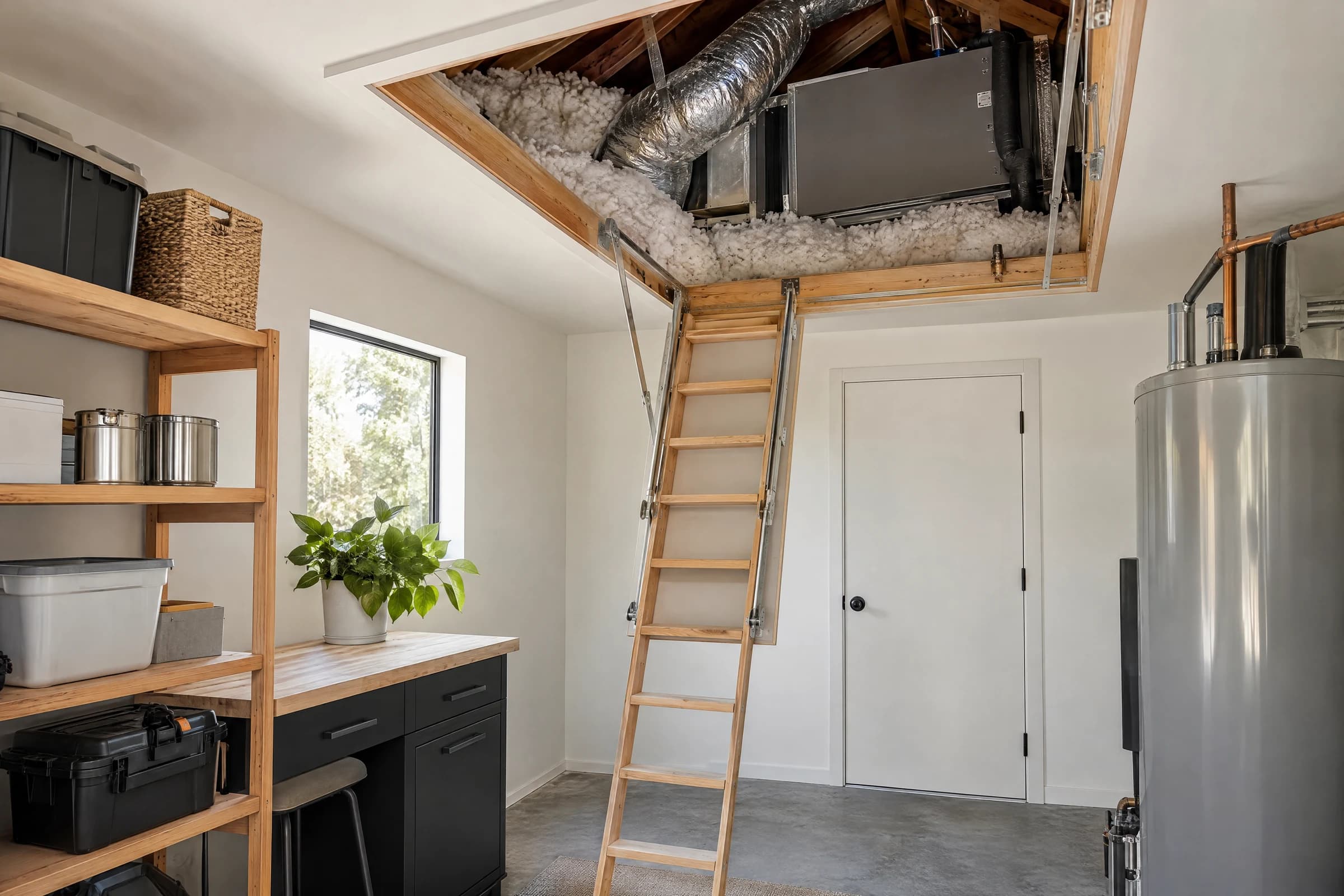
Listing photographs of an Austin house should help a buyer understand scale and function, and preparation is mostly subtraction. Clear everyday surfaces, simplify furniture so the route through each room is obvious, put personal paperwork away, and store valuables and private materials somewhere showings cannot reach. Leave enough texture, a chair by the window or a bowl on the counter, that the rooms read as lived in rather than emptied.
Follow the light. Clean the windows, replace failed bulbs and check every fixture, because Section 2 of the disclosure asks about known defects in lighting fixtures and Section 1 asks whether the items on the property are in working condition; the photographer's timing should follow which rooms face east and west rather than a noon default. Outside, the entrance, path and patio are part of the story, and pruning on a regulated tree, which in Austin means 19 inches or more in diameter measured 4.5 feet above the ground, is limited to less than 25% of the canopy without a permit.
Then decide what the wide-angle lens is allowed to do. A lens that fits a whole room into one frame also makes distances hard to judge, which is why buyer guides tell people to bring a tape measure. Photograph rooms from a natural standing height where you can, and leave the buyer able to trust the picture when the walkthrough comes.
Sources: Texas Real Estate Commission ↗ · City of Austin Development Services ↗
How do you keep Austin listing photos and descriptions honest?
An honest listing in Austin is a legal requirement for the agent and a practical one for the seller. TREC rule 535.155 treats as misleading any advertisement “that is inaccurate in any material fact or representation,” and the disclosure you signed lists the defects you know about; a photograph or description that hides one contradicts the other.
So discuss editing before the shoot. Removing a reflection or brightening a dark room is presentation; erasing a foundation crack, a stained ceiling, a neighboring structure or the slope of a yard is a material fact disappearing. Virtual staging should be labeled, and permanent features should stay in the frame. Keep the written description current with the Seller's Disclosure Notice, and update both if something changes between the shoot and the contract.
The close-to-list ratio is the reason this matters commercially. Unlock MLS's 93.2% metro average is the gap between what listings asked and what buyers paid after inspection, and a listing whose photographs promised more than the walkthrough delivered tends to give up that gap in the option period. If you want the plan above turned into dates for one address, bring the house to David and the disclosure, the ECAD check, the permits and the rebates can be sequenced against a target listing week.
Sources: Texas Real Estate Commission ↗ · Unlock MLS ↗
Common questions
How do I sell my house in Austin?
Start with the paperwork, then the repairs, then the photographs. Complete TREC's Seller's Disclosure Notice (Form 55-1), check ECAD status with Austin Energy if the home is 10 years old or older inside the city limits, reconcile any unpermitted work, finish repairs that a buyer's inspector would mark Deficient, claim Austin Energy or Austin Water rebates that fit, and only then prepare the rooms and book the shoot. Price against closed sales, not asking prices; the August 2026 Austin-metro average sale closed at 93.2% of list.
How fast can I sell my house in Austin?
Realtor.com's median days on market for Austin-metro listings was 73 in August 2026, per FRED, and about 42% of active listings carried a price reduction, so a typical listing is measured in weeks, not days. A home that lists with its disclosure, energy audit and permits already in order removes the questions that slow an option period. No figure here predicts how long any one house will take.
Do I need an energy audit to sell my house in Austin?
If the home is inside the Austin city limits, on Austin Energy service and 10 years old or older, the ECAD ordinance requires an energy audit by a certified ECAD Energy Professional, delivered to the buyer no later than 3 days before the option period ends. An audit is good for ten years. Homes under ten years old, and homes that completed Austin Energy's Home Energy Savings program, three or more rebated improvements or at least $500 in rebates, or Weatherization Assistance in the last ten years, are exempt.
What has to be disclosed when selling a house in Texas?
TREC's Seller's Disclosure Notice, Form 55-1 (effective May 28, 2026), asks about the items on the property and whether they work, known defects, smoke detectors, conditions such as improper drainage, termites and soil movement, repairs needed, flood conditions and claims, unpermitted work, HOA fees, lawsuits, insurance, private roads and storage tanks. It records the seller's knowledge as of the signing date and is not a warranty. If a buyer receives it after signing the contract, the buyer may terminate within 7 days of receipt.
Do I need a permit to repaint or replace countertops before selling in Austin?
No. The City of Austin exempts painting, papering, tiling, carpeting, cabinets, countertops and similar finish work from a building permit, along with gypsum board, foundation and floor decking repairs of 128 square feet or less, fences up to 7 feet and retaining walls up to 4 feet, all subject to the building code. Larger structural, electrical, plumbing or mechanical work needs a permit, and Section 9 of the disclosure asks whether any past work was done without one.
Take this to your next conversation
- Complete Form 55-1 first: every Yes on it is either a repair decision or a disclosure, and the buyer's 7-day termination clock runs from delivery.
- Confirm ECAD status with Austin Energy in week one, and book the audit or file the exemption before the photographer is scheduled.
- Start rebate work (Home Energy Savings, WaterWise) at the beginning of the plan, since each needs a participating contractor, approval and a final inspection.
Sources and review date
Sources checked . Planning suggestions are editorial guidance; current property facts and requirements need an address-specific check.
- Unlock MLS: August 2026 Central Texas Housing Report, released September 15, 2026 ↗
- FRED: Realtor.com median days on market, Austin metro (MEDDAYONMAR12420) ↗
- FRED: Realtor.com active listing count, Austin metro (ACTLISCOU12420) ↗
- FRED: Realtor.com price-reduced listing count, Austin metro (PRIREDCOU12420) ↗
- Texas Real Estate Commission: Seller's Disclosure Notice, Form 55-1, effective May 28, 2026 ↗
- Texas Real Estate Commission: Seller's Disclosure Notice, Form 55-1 (PDF) ↗
- Texas Real Estate Commission: One to Four Family Residential Contract (Resale), Form 20-19, Paragraph 7 (PDF) ↗
- Texas Real Estate Commission: Property Inspection Report, Form REI 7-6 (PDF) ↗
- Texas Real Estate Commission: TREC Rules, 22 TAC § 535.155 (advertisements) and §§ 535.227 to 535.228 (inspector standards of practice) ↗
- Austin Energy: ECAD for residential customers ↗
- Austin Energy: ECAD exemptions for home sellers ↗
- Austin City Code Chapter 6-7, Energy Conservation (ECAD ordinance), as published by Austin Energy (PDF) ↗
- City of Austin Development Services: Work exempt from building permits ↗
- Austin Energy: Home Energy Savings rebates and eligibility ↗
- City of Austin Watershed Protection and Austin Water: Rebates, free stuff and grants ↗
- Austin Water: WaterWise Landscaping rebate guide ↗
- Austin Water: Find your watering day (current water restrictions) ↗
- Austin Water: Austin returns to Conservation Stage watering restrictions ↗
- City of Austin Development Services: Trees on residential property ↗