AUSTIN GUIDES / MOVING TO AUSTIN
Moving to Austin, TX: costs, deadlines, suburbs and weather for 2026
Moving to Austin starts with two state deadlines: Texas gives new residents 30 days to register a vehicle, according to the Texas Department of Motor Vehicles, and an out-of-state driver license is good for up to 90 days, according to the Texas Department of Public Safety. The biggest local number is housing: a City of Austin home had a median sale price of $560,000 in August 2026 and median rent was $2,200, Unlock MLS reported. This guide lays out the first 90 days with the official link for each step, what a month costs from the rate sheets, how the suburbs compare, and what the weather and floodplain mean for a house.
By David Eimer · Austin Guides · Facts reviewed

The numbers
- Deadline to register a vehicle after moving to Texas
- 30 daysAs of TxDMV, fetched September 28, 2026
Texas insurance and, in Travis or Williamson County, an emissions inspection come first; a $90 new resident tax is due within the same 30 days.
- How long an out-of-state driver license stays valid
- Up to 90 daysAs of Texas DPS, fetched September 28, 2026
Register every vehicle in Texas first. DPS works by appointment only, and a Class C license is $33 for eight years.
Texas Department of Public Safety: moving to Texas, a guide to driver licenses and IDs ↗
- Median sale price, City of Austin
- $560,000As of August 2026
Down 4.3% from August 2025. The metro median was $412,000; median rent was $2,200 in the city and $2,150 in the metro.
Unlock MLS: August 2026 Central Texas Housing Report, released September 15, 2026 ↗
- State income tax
- NoneAs of Texas Comptroller field guide, December 2025
Sales tax in Austin is 8.25%: 6.25% state, 1% City of Austin and 1% CapMetro.
Texas Comptroller: Taxes of Texas, A Field Guide (December 2025) ↗
- Combined property tax rate, City of Austin and Austin ISD home
- $2.046485 per $100As of 2025 tax year
Computed from five adopted rates: $2,046 a year per $100,000 of taxable value before exemptions. Austin ISD had not posted a 2026 rate on the county list updated September 25, 2026.
Travis County Tax Office: tax rates by taxing unit, 2026 and prior years (spreadsheet) ↗
- Typical Austin Energy bill, 860 kWh
- $116.45 a monthAs of Rates page modified December 1, 2025
Austin Water's average bill rises from $99.91 to $107.67 on October 1, 2026, per its fact sheet.
Austin Energy: residential rates inside the City of Austin ↗
- Days a year at or above 100°F
- 28.7As of NOAA 1991-2020 normals, Austin Camp Mabry
The same normals average 122.8 days at or above 90°F; August's normal high is 97.8°F.
NOAA NCEI: 1991-2020 annual climate normals, Austin Camp Mabry (USW00013958) ↗
- City of Austin population
- 1,002,632As of July 1, 2025 (Census Vintage 2025)
The 12th most populous U.S. city. The Austin–Round Rock–San Marcos metro had 2,620,945 residents.
U.S. Census Bureau: Vintage 2025 city and town population estimates, released May 14, 2026 ↗
What should you know before moving to Austin?
Austin is a city of 1,002,632 people as of July 1, 2025, the Census Bureau's Vintage 2025 estimates show, and it became the 12th U.S. city with at least a million residents between 2024 and 2025. The Austin–Round Rock–San Marcos metro, which covers Travis, Williamson, Hays, Bastrop and Caldwell counties, reached 2,620,945, up 14.8% from its April 2020 base (computed). Most of the added residents live outside the city: Austin gained 44,481 of the metro's 337,554, while Georgetown grew 58.5% and Leander 53.8% (all computed).
The job base is large and still growing. The Bureau of Labor Statistics counted 1,424,000 nonfarm jobs in the metro in August 2026, seasonally adjusted, up 17,000 or 1.2% from a year earlier (computed), and the metro's unemployment rate was 3.7% in July 2026, both via FRED. In the year to July 1, 2025, the Census Bureau estimates the metro gained 19,860 people who moved from elsewhere in the United States and 17,457 from abroad.
Sources: U.S. Census Bureau: Vintage 2025 city and town population estimates, released May 14, 2026 ↗ · U.S. Census Bureau: Vintage 2025 metropolitan area population estimates and components of change ↗ · U.S. Census Bureau: Vintage 2025 population estimates, Texas incorporated places (sub-est2025_48) ↗ · FRED: BLS total nonfarm employment, Austin metro, seasonally adjusted (AUST448NA) ↗ · FRED: BLS unemployment rate, Austin metro (AUST448UR) ↗
What do you need to do in your first 90 days after moving to Austin?
Moving to Austin sets off a short list of Texas deadlines, and the order matters because each step needs a document from the one before. Texas DPS requires every vehicle to be registered in Texas before you apply for a driver license, and the Travis County Tax Office says the same. Registration in turn needs Texas insurance and, in Travis and Williamson counties, a passed emissions inspection. The table puts the steps in that order, with the timing and the office for each.
The first 90 days after moving to Austin: each task, when to do it and where
| Task | When | Where |
|---|---|---|
| Start electric, water and trash service | Before move-in day | City of Austin Utilities, 512-494-9400 or online; $200 deposit unless waived |
| Buy Texas auto insurance | Before registering | Any insurer; minimums of $30,000 per person, $60,000 per accident and $25,000 for property |
| Pass an emissions inspection | Before registering, in Travis or Williamson County | A DPS-certified station; $11.50 at most for emissions only |
| Register the vehicle and pay the $90 new resident tax | Within 30 days of moving | Your county tax office; the Travis County Tax Office serves walk-ins, Travis County residents only |
| Apply for a Texas driver license | Within 90 days, after registering every vehicle | Texas DPS, by appointment at txdpsscheduler.com; $33 for eight years |
| Register to vote | 30 days before an election; October 5, 2026 for November 3 | Your county voter registrar, which is the Tax Office in Travis County |
| Forward your mail | Allow up to 2 weeks | USPS online, with a $1.25 identity check |
| Enroll children in school | Before the first day | The district's school finder; Austin ISD asks for an electric or gas bill, lease or mortgage statement dated within 45 days |
| Apply for the homestead exemption | Before May 1, or within a year of buying if the seller had none | The appraisal district; TCAD needs an ID showing the home's address |
| Vaccinate and microchip pets | Rabies vaccine by 4 months of age | Your veterinarian; Austin Animal Services offers free microchips |
| Get a library card | Any time | Austin Public Library, free for addresses in Austin and its extraterritorial jurisdiction, with photo ID and proof of address |
Start utilities before the truck arrives. City of Austin Utilities bills electricity, water, wastewater, trash and drainage on one statement. It charges $20 to start electric or water service and $15 to start solid waste service, plus a $200 deposit that it waives for customers who stay enrolled in Autopay and eBill for 12 billing cycles, bring a reference letter from another utility or meet other listed criteria. Service can be started by phone at 512-494-9400, online or in person.
Voter registration follows the county, not the state. VoteTexas.gov says Texans must register by the 30th day before an election, which makes October 5, 2026 the deadline for the November 3 election, and that a move to a new Texas county means registering again. The state's online application still has to be printed, signed and mailed to the county. In Travis County the Tax Office is the voter registrar, and a registration takes effect 30 days after it arrives.
Sources: Texas Department of Public Safety: moving to Texas, a guide to driver licenses and IDs ↗ · Travis County Tax Office: New to Texas vehicle registration ↗ · Texas Department of Motor Vehicles: New to Texas ↗ · City of Austin Utilities: start, stop and transfer service ↗ · City of Austin Utilities: residential fees and deposits ↗ · VoteTexas.gov (Texas Secretary of State): register to vote ↗ · Travis County Tax Office: voter registration ↗
How do you register a car and get a Texas driver license in Austin?
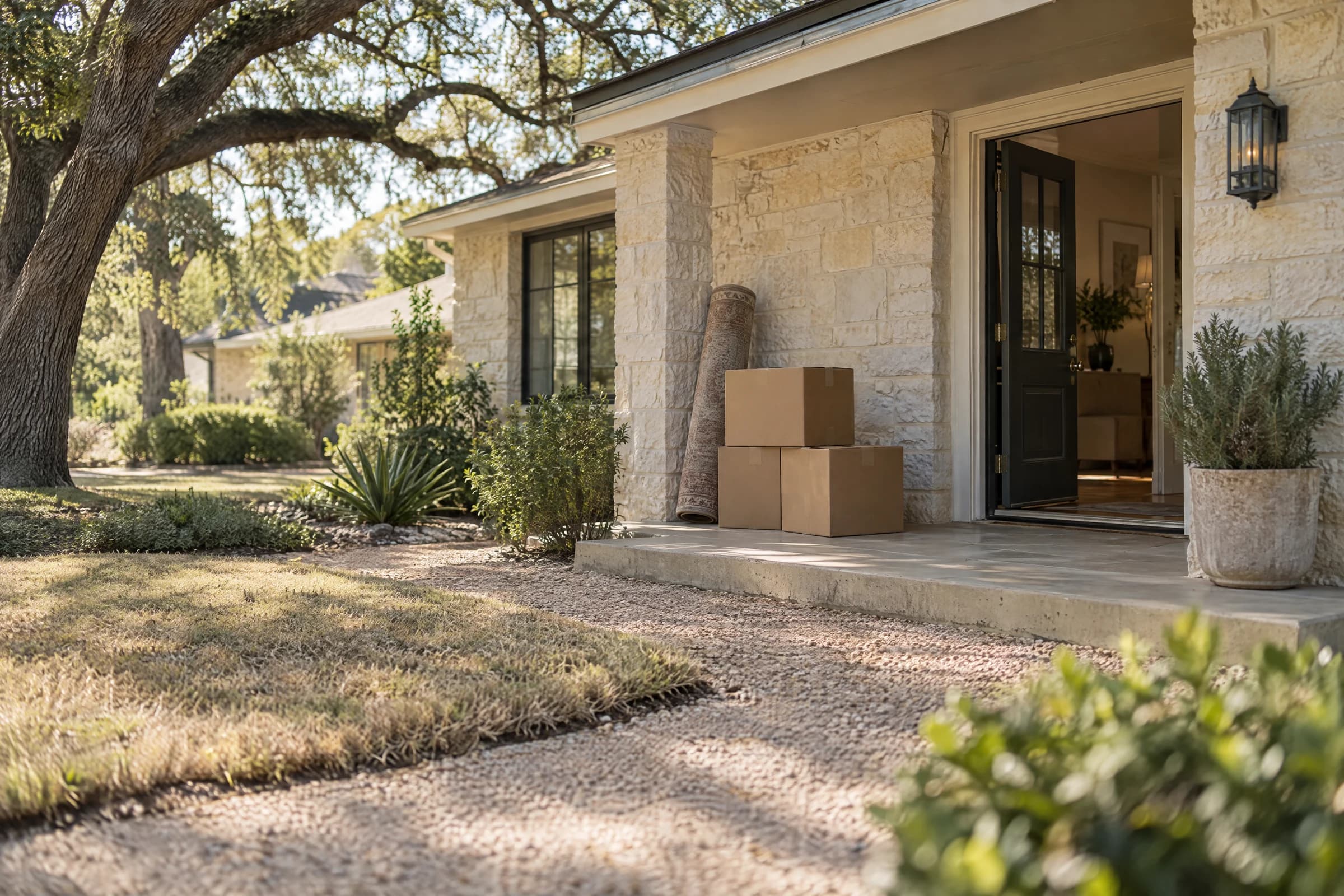
The Texas Department of Motor Vehicles gives new residents 30 days from the move to register a vehicle, and its checklist for new Texans lists four steps to take in order: Texas insurance, an inspection, registration at the county tax office, then the driver license. Texas stopped requiring safety inspections for non-commercial vehicles on January 1, 2025, according to DPS, but Travis and Williamson counties still require an emissions test for gasoline vehicles 2 to 24 years old, at a maximum of $11.50. Hays and Bastrop counties are not on the DPS emissions list.
At the Travis County Tax Office, bring the emissions report, proof of insurance, the original title or the latest registration from your previous state, a valid photo ID and Form 130-U; a temporary registration is not accepted. The office serves Travis County residents only, in walk-in and drive-thru lines that can close early at capacity. Fees start with TxDMV's $50.75 base registration, $1 for TexasSure and Travis County's $11.50 local fee. The Texas Comptroller adds a $90 new resident tax, due within 30 days, for a vehicle already registered in your name in another state.
Then book DPS. An out-of-state license is valid for up to 90 days after the move, and DPS offers driver license services by appointment only, booked at txdpsscheduler.com up to six months ahead. Bring proof of identity and of U.S. citizenship or lawful presence, your Social Security number, two documents showing your Texas address, Texas registration and insurance for each vehicle, and the license you are surrendering; new residents who surrender a valid license skip the written and driving tests. A Class C license for ages 18 to 84 costs $33 and lasts eight years.
Keep the new license handy. The Travis Central Appraisal District's homestead application requires a driver license or state ID that shows the home's address, so a buyer should update the license before filing for the exemption.
Sources: Texas Department of Motor Vehicles: New to Texas ↗ · Texas Department of Motor Vehicles: Vehicle title and registration information for new Texans (January 2025) ↗ · Texas Department of Public Safety: vehicle safety inspection program changes now in effect, January 3, 2025 ↗ · Texas Department of Public Safety: cost of inspection and emissions counties ↗ · Travis County Tax Office: New to Texas vehicle registration ↗ · Texas Department of Motor Vehicles: registration fee chart, effective January 1, 2026 ↗ · Texas Comptroller: motor vehicle sales and use tax, including the $90 new resident tax ↗ · Texas Department of Public Safety: moving to Texas, a guide to driver licenses and IDs ↗ · Texas Department of Public Safety: apply for a Texas driver license ↗ · Texas Department of Public Safety: Texas residency requirement for driver licenses and ID cards ↗ · Texas Department of Public Safety: driver license services by appointment ↗ · Texas Department of Public Safety: driver license and ID card fees ↗ · Travis Central Appraisal District: Homestead Exemptions ↗
How much does it cost to live in Austin?
Housing is most of the answer. Unlock MLS reported a median sale price of $560,000 in the City of Austin for August 2026, down 4.3% from a year earlier, and $412,000 across the metro, down 6.4%. Median rent on leases closed through the MLS was $2,200 in the city and $2,150 in the metro. With 20% down on the city median at Freddie Mac's 7.03% average 30-year rate for the week of September 24, 2026, principal and interest come to about $2,990 a month before taxes and insurance (computed).
Monthly cost inputs for an Austin household, from the official rate sheets
| Cost line | Figure | Basis and date |
|---|---|---|
| Median rent, City of Austin | $2,200 a month | Leases closed through the MLS, August 2026 |
| Median rent, Austin metro | $2,150 a month | Leases closed through the MLS, August 2026 |
| Principal and interest, city median home with 20% down | $2,989.59 a month | Computed: a $448,000 loan over 30 years at Freddie Mac's 7.03% average for September 24, 2026 |
| Property tax, City of Austin and Austin ISD | $170.54 a month per $100,000 | Computed from the 2025 adopted rates, before exemptions |
| Electricity, Austin Energy | $116.45 | Austin Energy's example bill for 860 kWh inside the city |
| Water and wastewater, Austin Water | $107.67 | Average bill from October 1, 2026: 5,800 gallons of water and 4,000 of wastewater |
| Trash, 64-gallon cart | $36.30 | FY2025-26 fee schedule, including the $23.80 base fee; the proposed FY2026-27 budget raises it to $38.00 |
| Transportation user fee, single-family home | $21.80 | City of Austin utility rates and fees schedule dated July 1, 2026 |
| CapMetro local transit, monthly fare cap | $41.25 | Current cap; a proposed increase would make it $49.50 from January 10, 2027 |
| Vehicle registration, Travis County | $50.75 a year plus fees | TxDMV base fee, plus $1 TexasSure, the county's $11.50 local fee and a $7.50 inspection replacement fee |
| Sales tax | 8.25% | 6.25% state, 1% City of Austin, 1% CapMetro |
| State income tax | 0% | Texas levies no state or local income tax |
The utility lines come from the City's own rate sheets. Austin Energy's example bill for a customer using 860 kWh, which it calls typical, is $116.45, and its four-tier rate charges more per kilowatt-hour as monthly use passes 300, 900 and 2,000 kWh, so a high-use summer month costs more per unit. Austin Water's average bill rises from $99.91 to $107.67 on October 1, 2026, the utility's fact sheet says. The City's statement also carries trash, drainage, a transportation user fee and a Clean Community Fee. Our cost of living in Austin breakdown works two household budgets from these rates.
Outside the City's utilities, the providers change. Austin Energy says its service area covers about 437 square miles, about half of it inside the Austin city limits. The Public Utility Commission's Power to Choose site says consumers in most parts of Texas can choose their electric company, but areas served by municipal utilities and cooperatives may not have that choice. Ask which electric, water and trash providers serve an address before comparing budgets across suburbs.
Two changes were pending on September 28, 2026. CapMetro's board was scheduled to vote that day on raising the local fare from $1.25 to $1.50 on January 10, 2027, with the monthly cap moving from $41.25 to $49.50, and the City's proposed 2026-27 budget would raise the typical 64-gallon trash bill from $36.30 to $38.00. Check both pages before building a budget on them.
Sources: Unlock MLS: August 2026 Central Texas Housing Report, released September 15, 2026 ↗ · Freddie Mac: Primary Mortgage Market Survey, week of September 24, 2026 ↗ · Austin Energy: residential rates inside the City of Austin ↗ · Austin Water: 2027 rate adjustment fact sheet, August 24, 2026 ↗ · Austin Resource Recovery: residential services rates and fees ↗ · City of Austin Utilities: utility rates and fees schedule, July 1, 2026 ↗ · Austin Energy: service area map ↗ · Public Utility Commission of Texas, Power to Choose: frequently asked questions ↗ · CapMetro: proposed fare increase, January 2027 and 2029 ↗ · City of Austin: FY2026-27 Proposed Budget, Volume I ↗
What taxes do you pay after moving to Austin?
Texas has no personal income tax. The Texas Comptroller's field guide to state taxes says Texans pay federal income taxes but not state or local income taxes, and that Texas has no state property tax either. Sales tax in Austin is 8.25%, the most Texas allows: 6.25% to the state, 1% to the City of Austin and 1% to the Capital Metropolitan Transportation Authority, on the Comptroller's July 2026 rate table.
Property tax is where Texas collects instead, and each local unit sets its own rate. A home in the City of Austin and Austin ISD paid five units at 2025 rates, Travis County, Travis Central Health, the City, Austin Community College and Austin ISD, for a combined $2.046485 per $100 of taxable value (computed from the Travis County Tax Office list), or $2,046 a year per $100,000 before exemptions. The 2026 rates for the first four are posted; Austin ISD's was not on the list updated September 25, 2026. The Austin property taxes guide works a full bill.
Owners cut that bill with the homestead exemption. TCAD grants it to people who own and live in the home on January 1, with an application and a driver license or state ID showing the property's address. Texas Tax Code §11.43(d) sets the deadline before May 1, and a buyer who closes after January 1 on a home whose seller had no homestead exemption can apply for the rest of that year before the first anniversary of the purchase. Many newer suburban subdivisions add a municipal utility district or public improvement district, which the new construction homes guide explains.
Sources: Texas Comptroller: Taxes of Texas, A Field Guide (December 2025) ↗ · Texas Comptroller: sales and use tax ↗ · Texas Comptroller: Texas sales and use tax rates, July 2026 ↗ · Travis County Tax Office: tax rates by taxing unit, 2026 and prior years (spreadsheet) ↗ · Travis Central Appraisal District: Homestead Exemptions ↗ · Texas Tax Code §11.43, application for exemption ↗
Which Austin suburbs fit your commute?
The Austin area is a large city ringed by fast-growing smaller ones, and the right fit depends on the trips you make every week, not on a ranking. The table lists 12 cities around Austin with their counties, their Vintage 2025 populations and the road distance from each city's Census point to the Texas Capitol, which we computed over OpenStreetMap roads. Distance is not drive time: 20 miles on I-35 or MoPac at 8 a.m. is a different trip from the same miles on a Sunday.
Twelve cities around Austin: county, population and road distance to the Texas Capitol
| City | County | Population, July 1, 2025 | Change since April 2020 | Road miles to the Capitol |
|---|---|---|---|---|
| Manor | Travis | 23,070 | +68.7% | 14.1 |
| Pflugerville | Travis, Williamson | 68,316 | +4.8% | 16.5 |
| Buda | Hays | 16,166 | +6.8% | 17.8 |
| Cedar Park | Williamson, Travis | 79,032 | +1.8% | 19.7 |
| Round Rock | Williamson, Travis | 141,282 | +18.2% | 20.7 |
| Kyle | Hays | 69,917 | +53.0% | 23.6 |
| Dripping Springs | Hays | 11,167 | +126.5% | 24.6 |
| Leander | Williamson, Travis | 91,132 | +53.8% | 26.3 |
| Hutto | Williamson | 46,048 | +66.9% | 27.2 |
| Georgetown | Williamson | 106,907 | +58.5% | 30.0 |
| Bastrop | Bastrop | 13,383 | +38.2% | 30.8 |
| Liberty Hill | Williamson | 13,317 | +276.6% | 32.2 |
The Census Bureau's 2024 American Community Survey gives the baseline. City of Austin workers who commuted averaged 24.2 minutes to work, and metro commuters averaged 28.2 minutes; 24.8% of city workers and 23.2% across the metro worked from home. Those averages hide the range, so test the specific drive. Our route test for a move to Austin explains how to time three everyday journeys from each candidate address at the hour you would make them.
County lines matter beyond the commute. The county decides which appraisal district values a home, which county tax appears on the bill and whether a car needs an emissions test. Each Austin-area city page lists its taxing units, combined tax rate, school districts and recent prices, and the Austin neighborhood atlas covers the neighborhoods inside the city.
Sources: U.S. Census Bureau: Vintage 2025 population estimates, Texas incorporated places (sub-est2025_48) ↗ · OSRM routing over OpenStreetMap roads (project-osrm.org) ↗ · U.S. Census Bureau: 2024 Gazetteer, Texas places (internal points) ↗ · U.S. Census Bureau: American Community Survey 2024 1-year, table S0801, Austin city ↗ · U.S. Census Bureau: American Community Survey 2024 1-year, table S0801, Austin metro ↗ · Texas Department of Public Safety: cost of inspection and emissions counties ↗
Do you need a car to live in Austin?
Whether you need a car in Austin depends on the address. CapMetro runs four Rapid lines, the 800, 801, 803 and 837, with a bus every 10 to 15 minutes, and the 801 and 803 cross the city north to south through UT and downtown. The CapMetro Rail Red Line has 10 stations between Downtown and Leander, with trains every 15 to 30 minutes Monday through Saturday and no Sunday service listed. Pickup, an on-demand shuttle, covers 12 zones for $1.25 a ride.
Getting around Austin without a car: CapMetro services and fares
| Service | What it covers | Fare |
|---|---|---|
| Local bus and Rapid | Rapid 800, 801, 803 and 837 run every 10 to 15 minutes; 801 and 803 cross the city through UT and downtown | $1.25 a ride, capped at $2.50 a day and $41.25 a month |
| CapMetro Rail Red Line | 10 stations from Downtown to Leander, every 15 to 30 minutes, Monday through Saturday | $3.50 a ride, capped at $7.00 a day and $96.25 a month |
| Pickup | On-demand shared shuttle in 12 zones, including Manor, Leander and Lago Vista | $1.25 a ride |
| Austin Light Rail | 9.8 miles and 15 stations from 38th Street on Guadalupe through downtown to South Congress and East Riverside | Planned to open in 2033 |
Fares are capped rather than sold as passes. In CapMetro's words, after you pay for two rides the rest of that service day is free, and after 17 capped days in a calendar month the rest of the month is free; monthly capping needs the Umo app or a reloadable fare card. Austin Transit Partnership, which is building the Austin Light Rail that CapMetro will operate, lists construction and testing from 2027 to 2033 and an opening in 2033, a schedule it calls for planning purposes.
Drivers meet toll roads quickly. TxDOT lists 183A, the MoPac Express Lanes, SH 45, SH 130, 290 Toll and the 71 Toll Lane among Austin-area toll roads, and says drivers without a toll tag pay 50% more. TxTag, EZ TAG, TollTag and several out-of-state tags work on those roads. TxDOT says the Harris County Toll Road Authority has processed tolls on its Austin roads since November 9, 2024, and a new or replacement tag is now an EZ TAG ordered through that authority.
Sources: CapMetro: Rapid routes 800, 801, 803 and 837 ↗ · CapMetro Rail: Red Line ↗ · CapMetro: Pickup on-demand service ↗ · CapMetro: fares and passes ↗ · CapMetro: Project Connect ↗ · Austin Transit Partnership: the light rail process and timeline ↗ · TxDOT: Austin-area toll roads ↗ · TxDOT: how toll tags work ↗
What is Austin's weather like, and what does it mean for a house?
Austin summers are long and hot. NOAA's 1991-2020 climate normals for the Austin Camp Mabry weather station put the normal high at 96.6°F in July and 97.8°F in August, with an average of 122.8 days a year at or above 90°F and 28.7 days at or above 100°F. Winters are short and mild: January's normal high is 62.5°F and its low 41.8°F, and the station averages 11.9 nights a year at or below freezing and 0.2 inches of snow.
Austin weather by month: 1991-2020 climate normals at Camp Mabry
| Month | Normal high | Normal low | Normal rainfall |
|---|---|---|---|
| January | 62.5°F | 41.8°F | 2.64 in |
| February | 66.5°F | 45.8°F | 1.89 in |
| March | 73.3°F | 52.2°F | 2.88 in |
| April | 80.3°F | 58.9°F | 2.42 in |
| May | 86.9°F | 66.8°F | 5.04 in |
| June | 93.2°F | 72.9°F | 3.68 in |
| July | 96.6°F | 75.0°F | 1.96 in |
| August | 97.8°F | 75.1°F | 2.74 in |
| September | 91.4°F | 70.1°F | 3.45 in |
| October | 82.5°F | 60.8°F | 3.91 in |
| November | 71.5°F | 50.5°F | 2.92 in |
| December | 63.9°F | 43.4°F | 2.72 in |
Rain arrives in bursts. Camp Mabry's normal annual rainfall is 36.25 inches, with May the wettest month at 5.04 inches. The City of Austin says about 10% of land in Austin is in the floodplain, subject to flash flooding, and that over a 30-year mortgage there is a 26% chance of a 100-year storm. Check an address on two maps: the City's FloodPro, which shows the floodplain the City regulates, and FEMA's Flood Map Service Center, the official source for the flood maps behind federal flood insurance. Our Austin flood map post shows how to read both.
Water rules shape yards. Austin Water has been under Conservation Stage restrictions since September 2, 2025, which limit automatic sprinklers to one day a week, Thursday for even addresses and Wednesday for odd, before 10 a.m. or after 7 p.m.; hand watering is allowed any time. Allergy season runs on a local calendar too: in January 2026 Austin's health officials said the city was in the midst of cedar allergies and called it peak allergy season.
Sources: NOAA NCEI: 1991-2020 monthly climate normals, Austin Camp Mabry (USW00013958) ↗ · NOAA NCEI: 1991-2020 annual climate normals, Austin Camp Mabry (USW00013958) ↗ · City of Austin Watershed Protection: floodplain management ↗ · City of Austin Watershed Protection: ATX Flood Safety ↗ · City of Austin: view floodplain maps and storm drain infrastructure (FloodPro) ↗ · FEMA Flood Map Service Center ↗ · Austin Water: find your watering day ↗ · City of Austin: health officials urge caution as Austin undergoes allergy and flu season, January 8, 2026 ↗
Should you rent or buy when you first move to Austin?
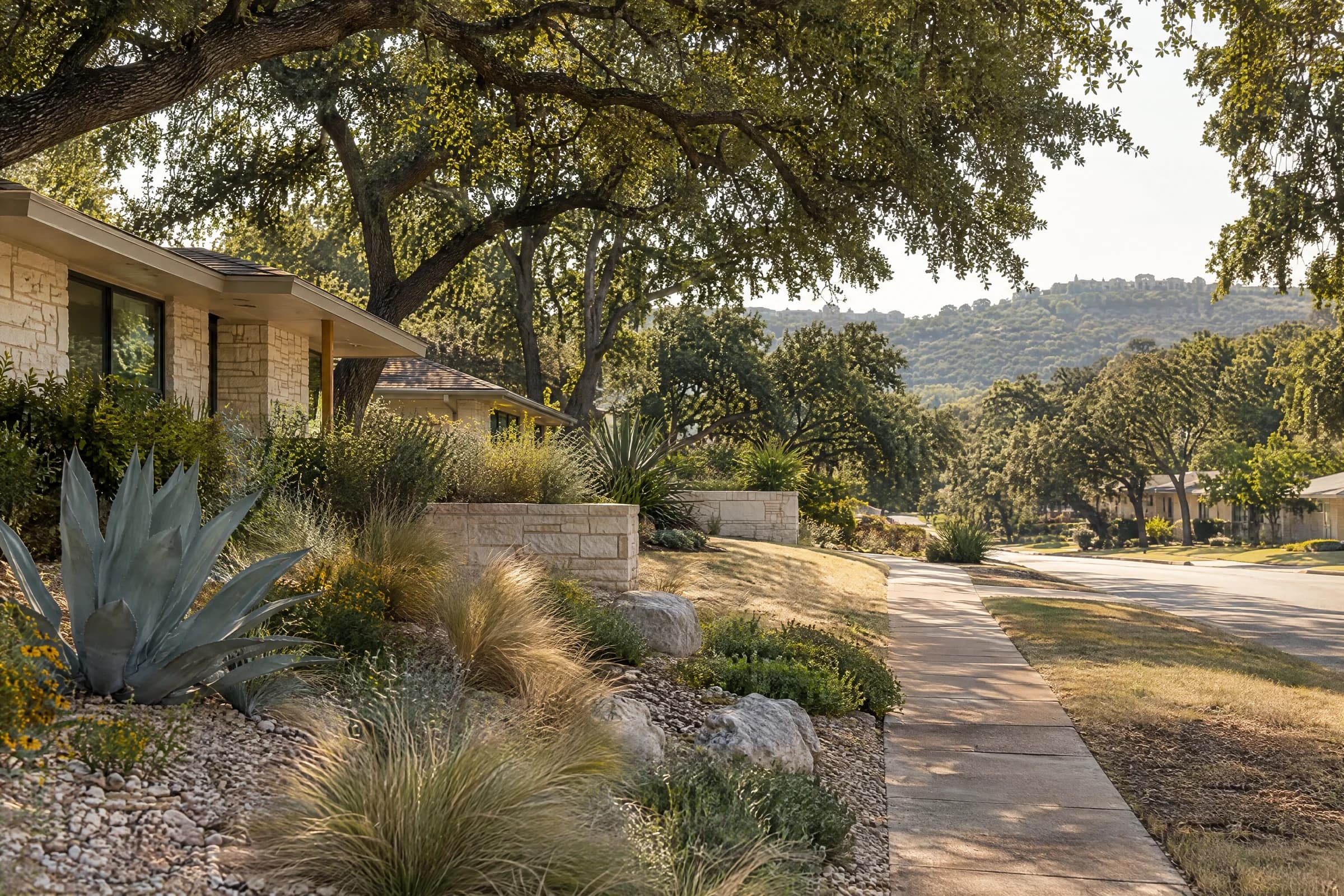
The August 2026 market gives a newcomer time to look. Unlock MLS counted 4,554 active listings in the City of Austin, 14.5% fewer than a year earlier, and 4.6 months of inventory; the metro had 13,676 listings and 5.1 months. The average close-to-list price in the city was 93.3%, up from 91.6% a year before. The city also had 2,005 active lease listings and 1.5 months of lease inventory, so renting while you learn the commutes is a practical first step for a buyer who is not in a hurry.
Buying in Texas has two rules that surprise newcomers. Texas does not require sale prices to be disclosed: the Texas Comptroller notes it is one of only about six states without some form of sales price disclosure for property tax purposes, so recent sale prices come from the MLS rather than public records. And since January 1, 2026, Texas Occupations Code §1101.563 has required an agent to sign a written agreement with a buyer before showing a home, stating the services, the term and the compensation, which the agreement must say is not set by law and is fully negotiable.
For a buyer moving from out of state, that agreement is the first practical step, before the first tour, virtual or in person. The Austin market data page tracks prices and inventory month to month, and the home search and payment estimator tests a real payment. If you are weighing neighborhoods from a distance, send David your timeline and the addresses you are considering; he can pull each parcel's records and tax lines and set up showings for the days you are in town.
Sources: Unlock MLS: August 2026 Central Texas Housing Report, released September 15, 2026 ↗ · Texas Comptroller: 2026 School District Property Value Study procedures manual (August 2026) ↗ · Texas Occupations Code §1101.563, written agreement with a buyer ↗ · Texas Real Estate Commission: what changes in 2026 about buyer/tenant representation in Texas ↗
Common questions
How long do you have to register your car after moving to Austin?
Texas gives new residents 30 days from the move to register a vehicle, according to the Texas Department of Motor Vehicles. In Travis and Williamson counties you need Texas insurance and a passed emissions inspection first, then registration at the county tax office. The Texas Comptroller's $90 new resident tax is due within the same 30 days for a vehicle already registered in your name in another state.
How long can you drive on an out-of-state license after moving to Texas?
Up to 90 days, according to the Texas Department of Public Safety. DPS requires every vehicle you own to be registered in Texas before you apply, serves driver license customers by appointment only, and charges $33 for a Class C license that lasts eight years. New residents who surrender a valid out-of-state license skip the written and driving tests.
How much does it cost to live in Austin, Texas?
Housing sets most of it: the City of Austin's median sale price was $560,000 and its median MLS rent $2,200 in August 2026, according to Unlock MLS. On the City's rate sheets, a typical Austin Energy bill is $116.45 and the average Austin Water bill is $107.67 from October 1, 2026. Texas has no state income tax, and Austin's sales tax is 8.25%.
Does Texas have a state income tax?
No. The Texas Comptroller's field guide to state taxes says Texans pay federal income taxes but not state or local income taxes. Texas relies instead on sales tax, 8.25% in Austin, and on local property taxes, which came to a combined $2.046485 per $100 of taxable value for a City of Austin and Austin ISD home at 2025 rates (computed).
What are the suburbs of Austin, TX?
Cities around Austin include Round Rock, Georgetown, Leander, Cedar Park, Hutto and Liberty Hill in Williamson County, Pflugerville and Manor in Travis County, Kyle, Buda and Dripping Springs in Hays County, and Bastrop. Their Census Bureau populations on July 1, 2025 ranged from 11,167 in Dripping Springs to 141,282 in Round Rock, and Liberty Hill grew fastest since 2020, up 276.6% (computed).
How hot does it get in Austin?
NOAA's 1991-2020 normals for Austin's Camp Mabry station put the normal high at 97.8°F in August and 96.6°F in July. The station averages 122.8 days a year at or above 90°F and 28.7 days at or above 100°F, and only 11.9 nights at or below freezing.
Do you need a car to live in Austin?
It depends on the address. CapMetro's four Rapid lines run every 10 to 15 minutes on major corridors for $1.25 a ride, and the Red Line train links Downtown and Leander Monday through Saturday. In the Census Bureau's 2024 survey, City of Austin commuters averaged 24.2 minutes to work and 24.8% of workers worked from home, so time the actual trip from the address before you decide.
When should you contact a real estate agent before moving to Austin?
Before the first showing. Since January 1, 2026, Texas Occupations Code §1101.563 has required an agent to sign a written agreement with a buyer before showing any home, stating the services, the term and the compensation, which the agreement must say is fully negotiable. Signing early also lets the agent pull flood maps, tax lines and recent MLS sales for the addresses you are weighing.
Take this to your next conversation
- Start City of Austin Utilities service before move-in and ask about the deposit waiver.
- Buy Texas insurance, pass the emissions test in Travis or Williamson County, and register every vehicle within 30 days.
- Book the DPS appointment early: the out-of-state license lasts 90 days, and every vehicle must be registered first.
- Register to vote in your new county at least 30 days before the next election.
- Check every candidate address on the City's FloodPro map and FEMA's Flood Map Service Center.
- Time three everyday trips from each address at the hour you would make them.
- Sign a written buyer agreement before the first showing, and file for the homestead exemption once you own and live in the home.
Sources and review date
Every figure on this page was checked against these sources on . Rates, rules and fees change; confirm them for a specific property before relying on them.
- U.S. Census Bureau: Vintage 2025 city and town population estimates, released May 14, 2026 ↗
- U.S. Census Bureau: Vintage 2025 population estimates, Texas incorporated places (sub-est2025_48) ↗
- U.S. Census Bureau: Vintage 2025 metropolitan area population estimates and components of change ↗
- FRED: BLS total nonfarm employment, Austin metro, seasonally adjusted (AUST448NA) ↗
- FRED: BLS unemployment rate, Austin metro (AUST448UR) ↗
- Texas Department of Motor Vehicles: New to Texas ↗
- Texas Department of Motor Vehicles: Vehicle title and registration information for new Texans (January 2025) ↗
- Texas Department of Motor Vehicles: registration fee chart, effective January 1, 2026 ↗
- Travis County Tax Office: New to Texas vehicle registration ↗
- Texas Comptroller: motor vehicle sales and use tax, including the $90 new resident tax ↗
- Texas Department of Public Safety: moving to Texas, a guide to driver licenses and IDs ↗
- Texas Department of Public Safety: apply for a Texas driver license ↗
- Texas Department of Public Safety: Texas residency requirement for driver licenses and ID cards ↗
- Texas Department of Public Safety: driver license services by appointment ↗
- Texas Department of Public Safety: driver license and ID card fees ↗
- Texas Department of Public Safety: vehicle safety inspection program changes now in effect, January 3, 2025 ↗
- Texas Department of Public Safety: cost of inspection and emissions counties ↗
- VoteTexas.gov (Texas Secretary of State): register to vote ↗
- Travis County Tax Office: voter registration ↗
- U.S. Postal Service: change of address and mail forwarding ↗
- Austin ISD: Enrollment 101 ↗
- Texas Health and Safety Code §826.021, rabies vaccination of dogs and cats ↗
- City of Austin Animal Services: free and low-cost services ↗
- Austin Public Library: get a library card ↗
- City of Austin Utilities: start, stop and transfer service ↗
- City of Austin Utilities: residential fees and deposits ↗
- Austin Energy: residential rates inside the City of Austin ↗
- Austin Energy: service area map ↗
- Public Utility Commission of Texas, Power to Choose: frequently asked questions ↗
- Austin Water: 2027 rate adjustment fact sheet, August 24, 2026 ↗
- Austin Resource Recovery: residential services rates and fees ↗
- City of Austin Utilities: utility rates and fees schedule, July 1, 2026 ↗
- City of Austin: FY2026-27 Proposed Budget, Volume I ↗
- CapMetro: fares and passes ↗
- CapMetro: proposed fare increase, January 2027 and 2029 ↗
- CapMetro: Rapid routes 800, 801, 803 and 837 ↗
- CapMetro Rail: Red Line ↗
- CapMetro: Pickup on-demand service ↗
- CapMetro: Project Connect ↗
- Austin Transit Partnership: the light rail process and timeline ↗
- TxDOT: Austin-area toll roads ↗
- TxDOT: how toll tags work ↗
- Texas Comptroller: Taxes of Texas, A Field Guide (December 2025) ↗
- Texas Comptroller: sales and use tax ↗
- Texas Comptroller: Texas sales and use tax rates, July 2026 ↗
- Travis County Tax Office: tax rates by taxing unit, 2026 and prior years (spreadsheet) ↗
- Travis Central Appraisal District: Homestead Exemptions ↗
- Texas Tax Code §11.43, application for exemption ↗
- Unlock MLS: August 2026 Central Texas Housing Report, released September 15, 2026 ↗
- Freddie Mac: Primary Mortgage Market Survey, week of September 24, 2026 ↗
- U.S. Census Bureau: American Community Survey 2024 1-year, table S0801, Austin city ↗
- U.S. Census Bureau: American Community Survey 2024 1-year, table S0801, Austin metro ↗
- OSRM routing over OpenStreetMap roads (project-osrm.org) ↗
- U.S. Census Bureau: 2024 Gazetteer, Texas places (internal points) ↗
- NOAA NCEI: 1991-2020 monthly climate normals, Austin Camp Mabry (USW00013958) ↗
- NOAA NCEI: 1991-2020 annual climate normals, Austin Camp Mabry (USW00013958) ↗
- City of Austin Watershed Protection: floodplain management ↗
- City of Austin Watershed Protection: ATX Flood Safety ↗
- City of Austin: view floodplain maps and storm drain infrastructure (FloodPro) ↗
- FEMA Flood Map Service Center ↗
- Austin Water: find your watering day ↗
- City of Austin: health officials urge caution as Austin undergoes allergy and flu season, January 8, 2026 ↗
- Texas Comptroller: 2026 School District Property Value Study procedures manual (August 2026) ↗
- Texas Occupations Code §1101.563, written agreement with a buyer ↗
- Texas Real Estate Commission: what changes in 2026 about buyer/tenant representation in Texas ↗